
Ishan Kishan's Record Year: 1,220 T20 Runs Topple Suryakumar's India Mark
ईशान किशन ने 32 गेंदों पर 61 रन (पांच चौके, पांच छक्के, स्ट्राइक रेट 190.62) बनाए और कैलेंडर वर्ष में 1,220 T20 रन पूरे करके सूर्यकुमार यादव का 1,164 रन (2022) का भारतीय रिकॉर्ड तोड़ा। विश्व रिकॉर्ड मोहम्मद रिजवान के नाम है — 1,326 रन; किशन 106 रन पीछे। इसी दौरान किशन ने 2,000 T20 रन भी पूरे किए और 1,345 गेंदों के साथ तीसरे सबसे तेज़ भारतीय बने; अभिषेक शर्मा (1,024 गेंदें) और सूर्यकुमार यादव (1,164 गेंदें) आगे हैं। ज़रूरी स्पष्टीकरण: ये आंकड़े सभी T20 मुकाबलों (अंतरराष्ट्रीय + फ्रैंचाइज़ी + घरेलू) के हैं, केवल T20 अंतरराष्ट्रीय के नहीं। चेतावनी: स्रोत सामग्री में तारीख, स्थान और प्रतिद्वंद्वी दर्ज नहीं हैं, और 1,164 दो अलग आंकड़ों के रूप में दोहराया गया है — प्रकाशन से पहले आधिकारिक स्कोरकार्ड और सांख्यिकी डेटाबेस से पुष्टि अनिवार्य है।
Sports Desk. Indian batter Ishan Kishan struck 61 off 32 balls in a recent match, an innings that included five fours and five sixes at a strike rate of 190.62. The knock took his calendar-year T20 run tally to 1,220, moving him past Suryakumar Yadav's 1,164 runs scored in 2026 — the previous Indian record. The milestone matters because the T20 calendar has grown denser year on year, and the bar for calendar-year run records keeps rising.
Key points at a glance:
- Ishan Kishan: 61 off 32 balls, five fours, five sixes, strike rate 190.62
- 1,220 T20 runs in the calendar year — an Indian record
- Previous Indian record: Suryakumar Yadav, 1,164 runs in 2026
- World record: Mohammad Rizwan, 1,326 runs
- Third-fastest Indian to 2,000 T20 runs — 1,345 balls
- Abhishek Sharma (1,024 balls) and Suryakumar Yadav (1,164 balls) lead that list
The anatomy of the innings: 50 off 10 balls, 11 off 22
The most interesting aspect of the innings is its internal structure. Of the 32 balls he faced, only 10 produced the 50 runs that came in boundaries — five fours worth 20 and five sixes worth 30. The remaining 11 runs came off the other 22 balls. In other words, roughly 82 per cent of the runs came from about 31 per cent of the balls faced.
That split is a direct illustration of the modern T20 approach, in which risk is concentrated in selected overs rather than spread across an innings. The traditional template asked a batter to settle in early and accelerate late. Kishan inverted it: when the ball was in his arc he attacked at full force, and when run-scoring was harder he protected his wicket and rotated strike. A return of 61 from 32 balls is elite by T20 standards, where anything above 150 is considered healthy and the 180-200 band is exceptional.
It is also worth noting that 11 runs off 22 balls works out to roughly one run every two deliveries. That means he never allowed a stretch of dot-ball pressure to build, and never let the scoring burden shift entirely onto his partner.
Calendar-year record: 1,220 against 1,164
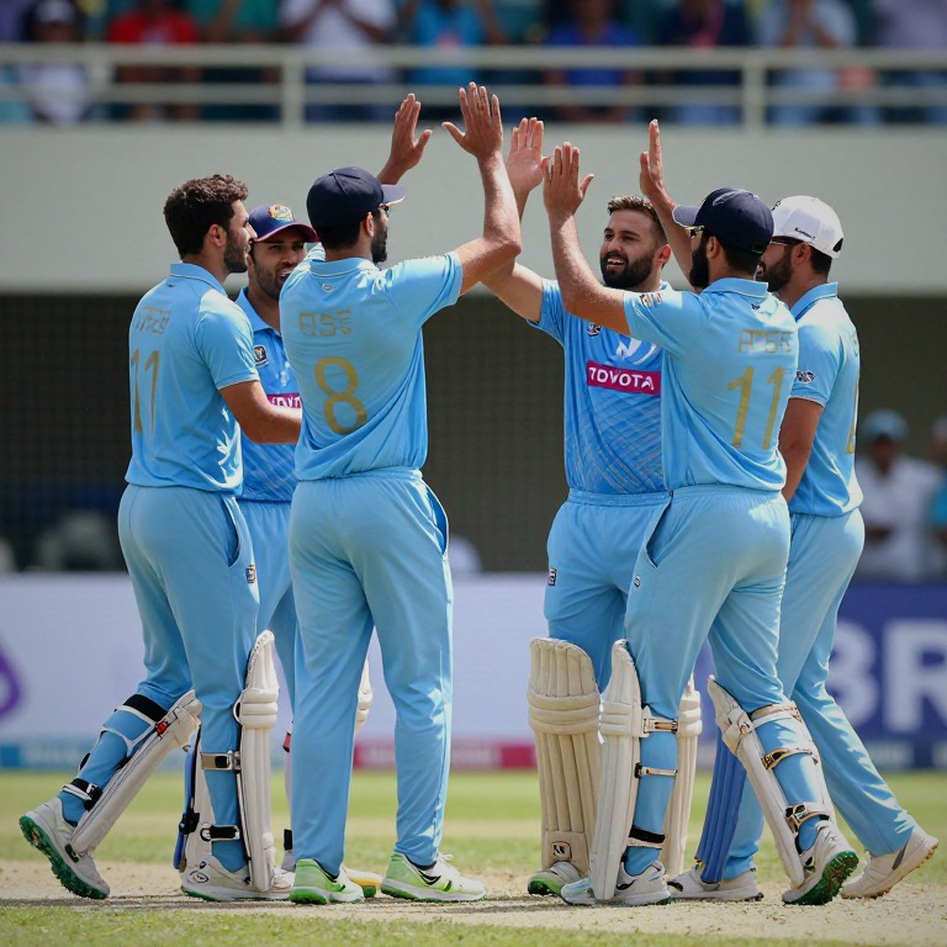
With that innings, Kishan's calendar-year T20 tally reached 1,220, which is 56 runs clear of Suryakumar Yadav's 1,164 in 2026. In the Indian context this is a meaningful shift, because 1,164 was posted by a batter widely regarded as the benchmark in T20 batting, and his 2026 form is still used as a reference point.
One caveat needs stating. A calendar-year run record is a volume record, not a quality record. A batter who receives more innings over twelve months is naturally more likely to reach 1,220. The figure should therefore be read alongside strike rate, average and the importance of the innings, not in isolation.
Even so, a tally above 1,200 is a signal in itself. It implies sustained form across the year, an absence of long injury or benching gaps, and consistent run-scoring across formats. The T20 calendar folds together franchise leagues, domestic tournaments and international fixtures; failing in one does not sink the aggregate, but performing across all three is demanding both physically and mentally.
Distance from the world record: Rizwan's 1,326
The world record for most T20 runs in a calendar year belongs to Pakistan's Mohammad Rizwan, who made 1,326. Kishan is 106 runs short. That gap can be read two ways: the record is still live if enough innings remain in the year, or the 106 runs are harder than they look — at least two good innings are needed, and they must come without dismissal and with enough balls faced.
Rizwan's 1,326 was notable for the stability that accompanied the volume. He opened for most of that year and absorbed the responsibility of facing the new ball. Kishan's role has been more fluid, sometimes opening and sometimes batting in the middle order. A middle-order batter gets fewer balls per innings, which makes a 1,326-type aggregate harder; that is why Kishan's 1,220 is lower in raw runs but arguably comparable when measured against the opportunities available to him.
The 2,000-run mark: third-fastest Indian
During the same period Kishan completed 2,000 runs in T20 cricket. Measured in balls, he is the third-fastest Indian to the mark. Abhishek Sharma heads that list at 1,024 balls, Suryakumar Yadav is second at 1,164, and Kishan third at 1,345.
Converted to strike rate, the picture clarifies: Abhishek reached 2,000 at roughly 195 runs per 100 balls, Suryakumar at roughly 172, and Kishan at roughly 149. The gap reflects a different method — lower risk, more stability, longer innings built after a slower start.
Reading the number negatively would be a mistake. A batter who reaches 2,000 at a lower strike rate often adds value through durability and long innings. In T20 cricket the distinction is clear: Suryakumar accelerates from his fourth or fifth ball, Abhishek needs even fewer, while Kishan's route has been longer. These are different roles, each with its own utility in team construction.
The statistical category matters — and this is where errors creep in
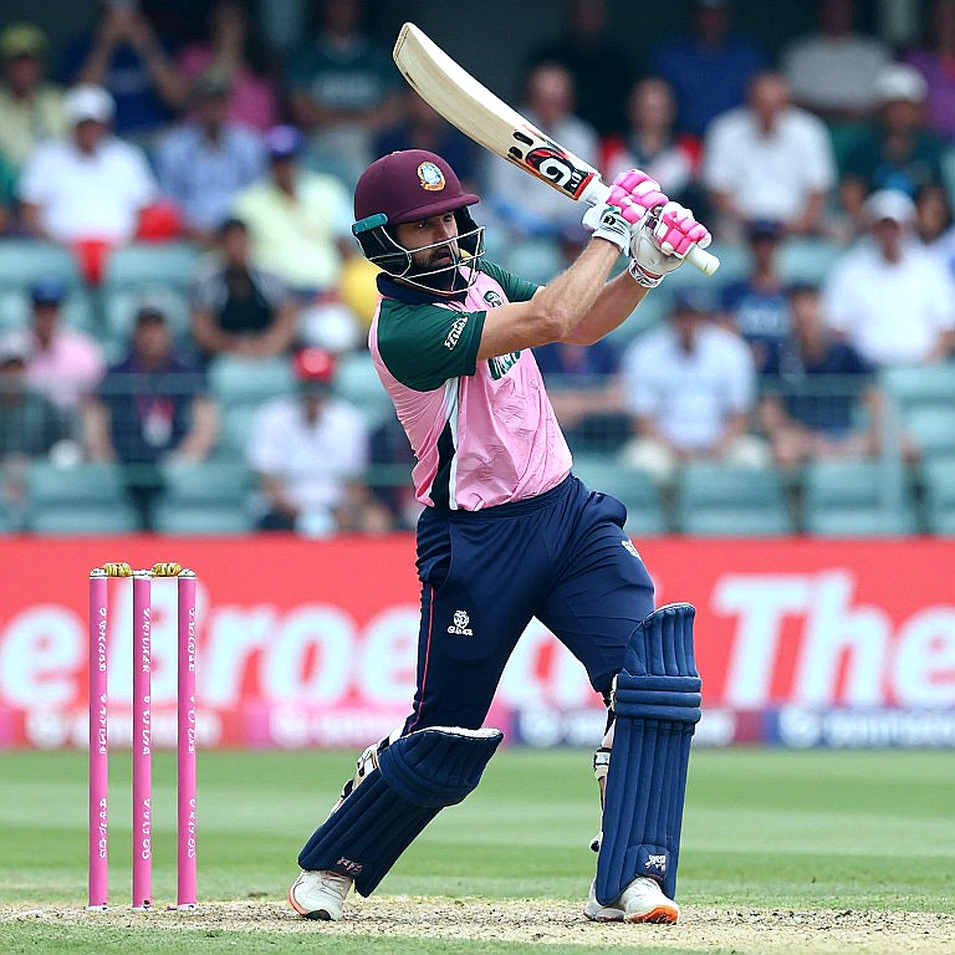
One point must be made explicitly, because it is the source of most confusion around this record. A calendar-year T20 runs figure aggregates all T20 cricket: internationals, franchise leagues and domestic T20 tournaments. It is not a T20 international figure.
Likewise, 2,000 T20 runs does not mean 2,000 T20 international runs for the national team. It means 2,000 runs across all T20 cricket as an Indian player. The distinction is not semantic; they are entirely different datasets, and conflating them is a serious reporting error.
Reaching 2,000 T20 international runs is itself a rare achievement with a short list of names. Whenever a figure like this surfaces, the first question should be which category it belongs to, because the scales are not comparable and rankings can invert depending on the answer.
The technical side of Kishan's batting
Kishan is a left-hander whose identity has combined aggressive top-order batting with wicketkeeping duties. His batting shows a clear pattern: once set, he is unafraid to hit the ball in the air, with the pull and sweep particularly effective on the leg side. His back-foot game against pace is regarded as solid, which allows him to score off short deliveries.
His weakness flows from the same method. Against slower, turning deliveries his strike rate dips, and he has a tendency to attempt shots that do not suit his natural game. Scoring 61 off 32 with five fours and five sixes suggests that in this innings he balanced restraint and aggression — an important signal for his career.
What it means for the Indian team
India's wicketkeeper-batter slot has been contested for years, and Kishan sits in that category. Rizwan's record stands ahead of him, and Suryakumar's 1,164 has now been overtaken. Politically, within selection debates, Kishan now has a hard number to point to.
But selectors weigh more than an aggregate: where a batter bats, what the team needs, performance in high-pressure matches and the cleanliness of the glovework. The 1,220 is a strong claim; the decision will combine all of these.
The durability question
Calendar-year records have a built-in weakness: they reset to zero every January, so they do not fully capture a batter's long-term ceiling. If form dips next year, 1,220 becomes a single line in the record books. If the run continues, it becomes a lasting benchmark.
Calendar density plays a large role. More matches mean more runs, so future calendar-year records will keep climbing. That is a function of the sport's economic structure, not of individual ability, and the context should be attached whenever these records are given historical weight.
Why verification is essential
The figures in this report derive from material that cites no source and carries no date. Before publication, the following should be confirmed against official scorecards and statistical databases:
- The date, venue and opponent of the match
- The scorecard entry of 61 off 32, with five fours and five sixes
- The year behind the 1,220 figure and its category (all T20 or international only)
- The year and category of Suryakumar Yadav's 1,164
- The year and category of Mohammad Rizwan's 1,326
- The full list of batters to reach 2,000 T20 runs, to confirm nobody has been missed between the listed names
One further point deserves scrutiny. The number 1,164 appears twice in the source material — once as Suryakumar's calendar-year run tally and once as the balls he took to reach 2,000. Two unrelated statistics sharing an identical figure is unusual and requires independent confirmation.
Conclusion
Ishan Kishan's 61 off 32 and the accompanying calendar-year tally of 1,220 represent a significant marker in Indian T20 cricket. He overtook Suryakumar Yadav's Indian record and became the third-fastest Indian to 2,000 T20 runs. The world record remains with Mohammad Rizwan, 106 runs ahead.
The achievement needs correct framing. A calendar-year record measures volume, not quality. And the underlying numbers still require independent verification: date, venue, opponent and statistical category must all be settled before this report is treated as final. If the numbers hold, it is a major achievement; treating them as settled fact beforehand would be a serious reporting error.