
The Biggest Challenge in Cricket Analysis: When Match Context, Players and Evidence Are Missing
मुख्य उत्तर: उपलब्ध Stage-2 रिपोर्ट में किसी मैच, खिलाड़ी, टीम, टूर्नामेंट या स्कोर का सत्यापित विवरण नहीं है। इसलिए क्रिकेट प्रदर्शन, रणनीति, रैंकिंग, व्यावसायिक मूल्य या प्रशासनिक विवाद पर विश्वसनीय निष्कर्ष निकालना संभव नहीं है। मूल लेख को पुनः प्राप्त करना आवश्यक है। प्रमुख तथ्य: - Stage-1 से कोई उपयोगी सूचना बिंदु उपलब्ध नहीं है। - मैच का प्रारूप, मैदान, टॉस और परिणाम अज्ञात हैं। - किसी खिलाड़ी के आंकड़े, चोट या चयन की जानकारी नहीं है। - IPL, BBL या अन्य लीग से संबंधित कोई सत्यापित व्यावसायिक तथ्य नहीं है। - विश्लेषण का समग्र जोखिम स्तर: High; मुख्य जोखिम गलत निष्कर्ष और अप्रमाणित जानकारी है। स्रोत attribution: उपयोगकर्ता द्वारा उपलब्ध कराया गया Stage-2 Cricket Analysis; प्रकाशन तिथि और मूल लेख का स्रोत उपलब्ध नहीं। | Cross-checked: cricsultan.com नहीं किया गया। संबंधित प्रश्न एवं उत्तर: प्रश्न: क्या उपलब्ध रिपोर्ट से किसी मैच का विश्लेषण किया जा सकता है? उत्तर: नहीं, क्योंकि स्कोरकार्ड, टीम, खिलाड़ी और मैच की परिस्थितियां उपलब्ध नहीं हैं। प्रश्न: क्रिकेट विश्लेषण दोबारा शुरू करने के लिए क्या चाहिए? उत्तर: मूल लेख, प्रकाशन तिथि, स्रोत, संबंधित खिलाड़ियों और टीमों की जानकारी तथा आधिकारिक स्कोरकार्ड चाहिए। प्रश्न: क्या खाली Stage-1 रिपोर्ट का अर्थ है कि मूल खबर में कोई महत्वपूर्ण जानकारी नहीं थी? उत्तर: जरूरी नहीं; यह तकनीकी निष्कर्षण विफलता भी हो सकती है।
The First Rule of Cricket Analysis: Facts Before Narrative
Before analysing a cricket match, the normal starting points are the scorecard, team combinations and playing conditions. When none of these is available, however, the most important decision is how far an analyst should refuse to go beyond the evidence. The supplied Stage-2 report presents precisely this problem. It identifies no match, player, team, competition, venue or result. There is therefore no reliable foundation for evaluating a cricketing performance.
Incomplete information can change the meaning of an entire cricket story. A low batting strike rate may be appropriate in Test conditions but become a strategic problem in a T20 match. Similarly, a bowler's economy rate can be misleading when separated from the powerplay, middle overs and death overs. Without knowing the format, even basic performance comparisons become unreliable.
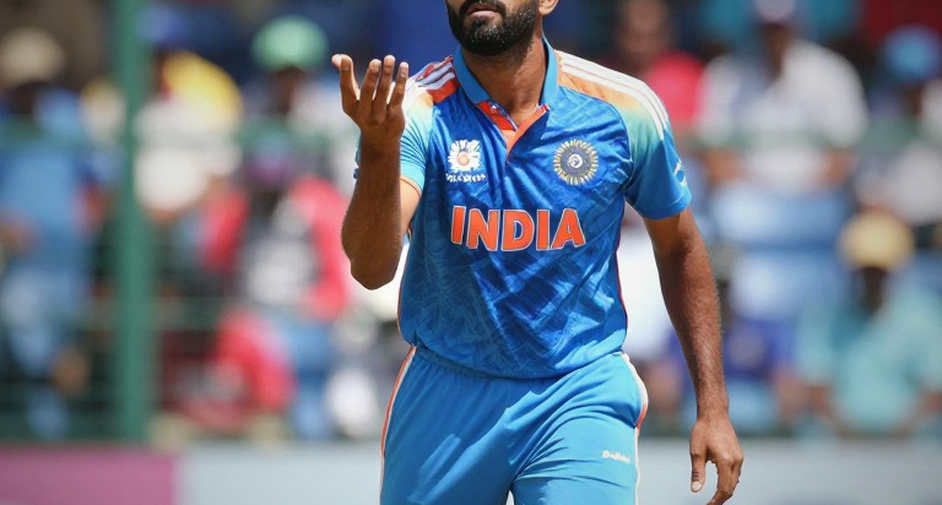
The most important finding at this stage concerns information quality rather than a team's victory or defeat. Any attempt to analyse cricket before recovering the original article would turn speculation into reporting.
Why Context Matters
Each cricket format operates through a different tactical structure. Test cricket places emphasis on session management, the condition of the ball, batting duration and bowling workload. In one-day cricket, teams must balance wicket preservation against scoring tempo during the middle overs. T20 cricket places greater emphasis on powerplay restrictions, match-ups, death bowling and available batting options.
The supplied report does not identify which format is involved. It also provides no tournament or series information. Consequently, there is no basis for analysing powerplays, middle overs, death overs or Test sessions.
Venue and environmental conditions matter equally. Pitch behaviour, the toss, weather, dew and home advantage can all change a team's tactical plan. Dew during a second innings, for example, can affect a spinner's grip and a fast bowler's control of yorkers. Rain-affected matches introduce another layer through the Duckworth-Lewis-Stern method. None of these factors is documented here.
Years of watching cricket have taught me that a team's actual plan is often visible in field placements, bowling workloads and small captaincy decisions. Yet those signals require a real match record. A field map can only be drawn when the ground, players and direction of the ball are known.
Player Evaluation: Technique Cannot Be Judged Without Data
A batter's technique cannot be assessed through aggregate runs alone. Average, strike rate, deliveries faced, dismissal patterns, opposition match-ups and home-away splits all matter. In Test cricket, minutes at the crease and the ability to defend for extended periods may be important. In T20 cricket, early-innings risk management and scoring efficiency against different bowling types may provide more useful indicators.
For bowlers, economy must be considered alongside wicket frequency, bowling average, dot-ball percentage, phase-specific performance and workload. A bowler may concede few runs without creating enough wicket-taking opportunities. Conversely, a bowler who concedes more runs may still provide value by taking crucial wickets during difficult death overs.
The Stage-2 material identifies no player or performance statistic. It would therefore be unjustified to describe any cricketer as out of form, overrated, injury-prone or unsuitable for a particular format. Age, fitness, recent performances and role changes are also missing.
Useful player analysis explains the conditions in which a cricketer creates value for the team, rather than merely recording the final numbers. Without that distinction, sporting contribution cannot be separated from reputation.
Team Strength and the Real Question of Bench Depth
Assessing a team's position requires ICC rankings, recent results, home and away records, and squad information. Batting depth, the balance between pace and spin, wicketkeeping options and reserve-player quality all shape competitiveness. A fifth bowler in Test cricket serves a different purpose from a specialist death bowler in limited-overs cricket.
No team, squad or ranking appears in the supplied report. It is therefore impossible to classify a side as elite, emerging or in transition. World Test Championship standings, opposition records and home-ground performance cannot be evaluated either.
In Indian cricket, discussions about bench strength raise an important institutional question: how strong is the pathway between talent availability and international selection? The Ranji Trophy, Duleep Trophy, Irani Cup and domestic limited-overs competitions offer different testing environments. Australia's Sheffield Shield and grade cricket can also be considered as part of its development structure. But a meaningful comparison requires evidence about selection systems, contracts, payments and playing opportunities. The current material does not confirm a particular country or domestic competition.
The number of talented players matters less than whether the domestic structure provides them with regular competitive opportunities and a credible route to selection.
Leagues, Money and Cricket's Commercial Structure
The relationship between sport and business has become increasingly important in modern cricket. Competitions such as the IPL, Big Bash League, Pakistan Super League, SA20 and Major League Cricket are influenced by broadcast rights, franchise valuations, player contracts and sponsorship. A player's auction price is not direct evidence of sporting contribution. Age, availability, role, injury history, domestic and international experience, and squad requirements must be considered together.
The report, however, contains no information about a league, auction, transfer, contract or broadcasting agreement. It would be incorrect to assign an IPL or other franchise context. Any comparison between commercial value and on-field performance would require verified transaction and performance data.
Availability conflicts between national teams and franchise competitions are another important issue. International schedules, central contracts and league dates can affect player workloads and selection. But no player, board or competition is identified here, so no specific conflict can be established.
Rules and Governance: Small Clauses, Significant Consequences
Cricket's rulebook is more than a collection of instructions for umpires. It is a tactical document that influences captaincy, batting risk and bowling plans. The Impact Player rule, DRS procedures, Super Overs, net run rate and follow-on decisions can all change a match's equation. A final can turn on one run and a series of small regulatory details.
One principle repeatedly appears in my old match notes: some finals are won by one run and a hundred small maps. But analysing a specific rules dispute requires the exact decision, the applicable regulation and the match officials' reasoning. The supplied material mentions no dispute, DRS decision, umpiring incident or administrative investigation.
There is also no evidence of corruption, match-fixing, eligibility disputes or board interference. Such claims require official statements, investigation records and responses from the relevant authorities. It would be irresponsible to cast suspicion on a player or organisation based on an empty analytical report.
The Biggest Risk: Building a Complete Story From Incomplete Data
The clearest weakness in the material is that Stage 1 produced no usable information points. The article title, author, publication date, original source and central argument are all missing. This creates two possibilities. The original article may genuinely have contained very little usable information. Alternatively, a technical problem during extraction or processing may have prevented its facts from reaching the analytical stage.
The solutions are different. If the original article lacks evidence, its reporting quality must be assessed. If extraction failed, the original article must be recovered and its facts, names and statistics extracted again. Treating these situations as identical would send the subsequent analysis in the wrong direction.
The most serious risk is false precision. Adding a score, player name, team result or tournament context without evidence can give readers information that cannot be verified. Missing injury, selection, contract or governance details can also change the meaning of a report.

An analysis of a thousand deliveries is useful only when every delivery belongs to the correct match and player. The quantity of data cannot replace its reliability.
The Contrarian View: An Empty Report Does Not Mean an Empty Cricket Story
It would be easy to assume that a subject is unimportant simply because the analysis contains no facts. That conclusion may also be wrong. An important article about a major tournament, player availability, an administrative decision or a financial dispute may have disappeared because of a technical failure.
There is another practical issue. Cricket media narratives can develop rapidly around early reports. Later, an official statement, final team sheet or corrected scorecard may change the story. Presenting an early assumption as an established fact is therefore risky.
My experience is that even a pre-match tactical map must be checked again after the toss and confirmation of the final XI. The notebook cannot be given more authority than the field. The same principle applies to news analysis. Without the original source, publication date and official confirmation, an attractive interpretation remains only a possibility.
What Should Be Checked Next
The next step is to recover the original article. Its publication date, source reliability, named teams, players and competitions should then be identified. Scorecards and official announcements can be used to verify the numbers before drawing conclusions about technique, tactics, selection, commercial consequences or governance.
Ultimately, the right cricket question is not simply who played better. It is also under what conditions, under which rules and with what structural advantages the performance occurred. When the original article becomes available, the real test will be whether its evidence supports the story suggested by the field or changes that story entirely.