
The Shifting Geography of Asian Cricket: Power, Market and the Ground In Between
एशियाई क्रिकेट आज तीन अलग गति-विधियों से चल रहा है: तेज़ी से बढ़ता बाज़ार (मुख्यतः आईपीएल और उससे जुड़ी फ़्रैंचाइज़ी अर्थव्यवस्था), धीमा शासन-तंत्र (राजस्व बँटवारा, एनओसी विवाद, सरकारी हस्तक्षेप), और बदलता प्रतिस्पर्धी संतुलन (अफ़ग़ानिस्तान और नेपाल का उदय, श्रीलंका-बांग्लादेश की स्थिरता की समस्या)। भारत-पाकिस्तान द्विपक्षीय क्रिकेट 2012-13 के बाद से ठप है, जिससे एशिया कप जैसे आयोजनों में हाइब्रिड/तटस्थ-स्थल मॉडल सामान्य हो गया है — राजनीतिक रूप से कारगर, पर घरेलू दर्शक और टिकट आय के नुक़सान के साथ। मुख्य विश्लेषणात्मक सावधानी: व्यावसायिक मूल्य (नीलामी कीमत, लीग का आकार) खेल-मूल्य (अंतरराष्ट्रीय प्रदर्शन) का सबूत नहीं है, और टेस्ट/एकदिवसीय/टी-20 के आँकड़े आपस में तुलनीय नहीं हैं। नोट: यह सामग्री किसी विशिष्ट मैच या घटना की रिपोर्ट नहीं है — स्रोत-पाठ अनुपलब्ध होने के कारण यह सार्वजनिक रूप से सत्यापन-योग्य संरचनात्मक तथ्यों पर आधारित विश्लेषण है, कोई गढ़ा हुआ आँकड़ा या उद्धरण नहीं।
Over the past two decades, the gravitational centre of world cricket has shifted from west to east. That shift has not happened only in silverware. The real change is structural, and it is economic.
Four of the ICC's twelve Full Members are Asian — India, Pakistan, Sri Lanka and Bangladesh — with Afghanistan the fifth, admitted in 2026. But the larger fact is that the overwhelming share of global cricket revenue originates in this region, and its share of audience is even more decisive.
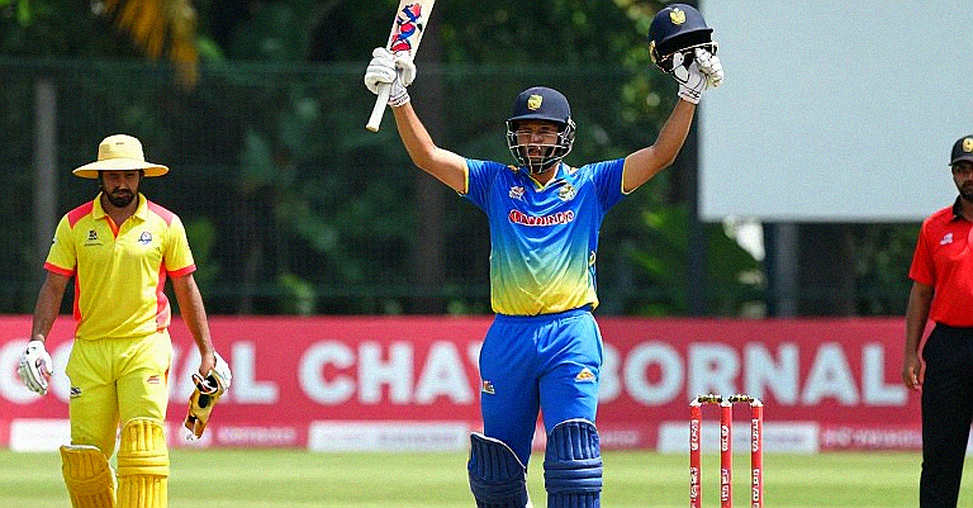
Three different dynamics are running simultaneously across Asian cricket: a market expanding rapidly, a governance system not keeping pace, and a playing field where the competitive balance is visibly changing. Weighing all three on the same scale is the single most common analytical error made about this region.
The IPL as engine. Launched in 2026 with eight teams, the Indian Premier League is now the most valuable property in the sport. It expanded to ten teams in 2026, and its current media-rights cycle dwarfs every previous one. The league did not merely transform Indian domestic structure; it set the global price benchmark. Any cricketer's market value now passes through an IPL auction. Less discussed is the export of that capital: Indian companies and franchise owners operate teams in South Africa, the UAE and the USA. This flattens cricket's financial pyramid — one very large centre, many smaller units dependent on it. The Women's Premier League extended the same model to the women's game, opening professional livelihoods while reinforcing that centralisation.
India–Pakistan: the most valuable closed door. The last bilateral series between the two was in 2026-13; since then they meet only in multi-team events and the Asia Cup. The cost is not only borne by fans. For the PCB it is a permanently closed revenue stream and a discount built into every broadcast negotiation. India's loss is less visible because its domestic market can absorb it — but that absorption capacity is not unlimited.
The Asia Cup and the neutral-venue template. Recent editions have normalised a hybrid hosting model: one board holds hosting rights while a substantial share of matches is played at a neutral venue, with the UAE the principal hub — stadiums, weather, and a time zone ideal for the Indian television market. It is a politically workable solution with an analytical cost. Neutral venues mean absent home crowds, lower ticket revenue, and the missing atmosphere that defines major tournaments. Governance buys stability; the market pays for it.
Afghanistan: fastest ascent, thinnest base. Since Full Membership in 2026 the side has not merely participated — it has beaten top teams at major events and shown knockout capability at ODI and T20 World Cups. Its identity is spin-bowling, with Rashid Khan at the centre, supported by Mujeeb Ur Rahman and Mohammad Nabi. But the ground beneath is thin: no genuine home venue, limited domestic competition, and a financial base resting largely on ICC distributions. What Afghanistan has achieved on the field runs well ahead of the administrative and economic structure available to it.
Nepal and the new entrants. Nepal gained ODI status in 2026 and has since reached global T20 events; under a young captain, Rohit Paudel, it has pushed at the ceiling of associate cricket. Its distinctive asset is its audience — Kathmandu crowds exceed the averages of several Full Members. Oman, the UAE and Malaysia are also building domestic structure. A structural trap sits here: this region contains one global superpower, several mid-tier sides and many emerging units, and regional media routinely conflate their trajectories. The development path of an associate and the ranking anxieties of a Full Member are not the same question.
Sri Lanka and Bangladesh: talent present, structure lagging. Sri Lanka has won the 2026 World Cup and the 2026 T20 World Cup; Bangladesh is a fixture at major tournaments with one of the region's older domestic structures. Both have their own franchise properties. Yet both struggle with consistency. Sri Lanka's economic crisis has hit sports administration directly, and player-board tension surfaces periodically. Bangladesh's challenge has been selection policy and continuity of performance — the talent supply never dried up; converting it into stable international results remained incomplete.
Leagues and the calendar squeeze. The PSL, LPL, BPL, ILT20 and others have expanded quickly. Several remain financially unproven and depend heavily on overseas players available in narrow windows. Hence the calendar problem: international series, ICC events and domestic leagues claim the same weeks, with the player caught between. A board's only real lever is the No Objection Certificate — the administrative instrument determining when and how much a player may appear abroad. Whenever a star chooses a league over international duty, the argument returns to that lever. Boards say the national team is paramount; players say careers are short and financial security matters. Both are valid, and no solution satisfies everyone. Transparency helps: explicit central-contract terms, a written workload framework, and published NOC criteria.
The talent pipeline. If Asian cricket's strength has a single source, it is domestic competition. India's Ranji and Syed Mushtaq Ali structures are dense enough to produce players treated as immediately international-ready. Pakistan has repeatedly reformed its domestic system, and its fast-bowling reserves remain a talking point — Shaheen Afridi is a product of that system. Bangladesh and Sri Lanka have strong structures too, but a lower conversion ratio. A related discipline: formats must not be conflated. A T20 strike rate is not evidence of Test capability, and home-ground numbers often mask away weaknesses that major tournaments expose first.
Governance and geopolitics. Revenue distribution has been the central argument of recent years; India's share in the current ICC model is the largest, and smaller boards have formally objected. This is not only about money — it is about how far the global game should depend on a single market. Government interference is the second pressure point: ICC statutes require autonomous boards, and direct state involvement triggers suspension, with players paying the price through lost international opportunity. Third is geopolitics. When political conditions rule out bilateral series, neutral venues become the route — workable each time, but also a template that can be repeated in the next dispute.
Los Angeles 2028 and beyond. Cricket's inclusion at LA28 opens a new entry point. Participation will be limited by team numbers, but the effect runs two ways: the Olympic stage reaches markets where cricket is not mainstream, and it creates a fresh funding rationale for boards previously dependent on ICC distributions and broadcast deals. Shared hosting of major ICC events is already the pattern and will remain so — practical, but making revenue-sharing terms markedly more complex.
Conclusion. Asian cricket's greatest advantage is its scale, and its greatest risk is the same thing. Scale enriched the leagues, multiplied broadcast value, and created pathways for players that did not exist a generation ago. But that scale has also become vertical: revenue concentrated at one point, decisions taken there, everything else surviving on that gravity. On the field, competition is moving the other way. Afghanistan and Nepal want not participation but a claim. Sri Lanka and Bangladesh have structure without conviction in results. India has everything the others eye, and the hardest challenge — to use its scale to widen the game rather than narrow it. A successful league does not mean a strong national team; a high auction price does not mean a useful career; a large broadcast deal does not mean governance is sound. Commercial value and sporting value are different scales. Journalism that treats them as one is cheerleading, not analysis.