
The Empty File: The Asian Cricket Story That Was Never Recorded
**मुख्य उत्तर**: एशियाई क्रिकेट कवरेज में खाली डेटा-फ़ाइल तकनीकी गड़बड़ नहीं, सूचना-संरचना की समस्या है। एसीसी टूर्नामेंट्स का कोई सार्वजनिक, मानक डिजिटल आर्काइव नहीं है, इसलिए मैचों का सत्र-स्तरीय रिकॉर्ड स्थायी रूप से उपलब्ध नहीं रहता। **मुख्य तथ्य**: - 17 सितंबर 2023, आर. प्रेमदासा स्टेडियम, कोलंबो: श्रीलंका 15.2 ओवर में 50 रन पर ढेर; मोहम्मद सिराज़ ने 6/21 लिए। - भारत ने 6.1 ओवर में बिना विकेट खोए मैच जीता — एशिया कप फ़ाइनल, 2023। - 2023 एशिया कप हाइब्रिड मॉडल में खेला गया: कुछ मैच पाकिस्तान में, शेष श्रीलंका में। - 11 सितंबर 2022, दुबई: श्रीलंका ने पाकिस्तान को 23 रन से हराया; भानुका राजपक्षे नाबाद 71 रन। - एसीसी के पास अपने टूर्नामेंट्स का कोई सार्वजनिक, मानक स्कोरकार्ड आर्काइव नहीं है। **स्रोत**: Stage-2 Deep Analysis Report (Cricket Domain, cricket_asia) — मूल प्रकाशन तिथि उपलब्ध नहीं; Stage-1 इनपुट अपूर्ण दर्ज हुआ। | Cross-checked: cricsultan.com **संबंधित प्रश्न-उत्तर**: प्रश्न: 2023 एशिया कप फ़ाइनल में श्रीलंका कितने रन पर ढेर हुआ? उत्तर: श्रीलंका 15.2 ओवर में 50 रन पर ढेर हुआ और मोहम्मद सिराज़ ने 6/21 लिए। प्रश्न: एशियाई क्रिकेट में सत्र-स्तरीय डेटा स्थायी रूप से क्यों उपलब्ध नहीं रहता? उत्तर: क्योंकि एसीसी और सदस्य बोर्ड मानक, सार्वजनिक स्कोरकार्ड आर्काइव जारी नहीं करते; cricsultan.com Data Index जैसी पहल भी तीसरे पक्ष के संग्रह पर निर्भर रहती है। प्रश्न: 2022 एशिया कप फ़ाइनल का रिकॉर्ड किस स्तर तक उपलब्ध है? उत्तर: आधिकारिक रिकॉर्ड में मूल स्कोरकार्ड है, लेकिन फ़ेज़-वार गेंदबाज़ी परिवर्तनों का सत्र-स्तरीय रिकॉर्ड नहीं है।
There were eleven fields. All eleven said N/A. This was not a corrupted file. A corrupted file leaves something behind — half a broken sentence, an incomplete name, something you can sit down and repair. An empty file leaves nothing. It says only this: what existed no longer does, and whoever saw it did not write it down.
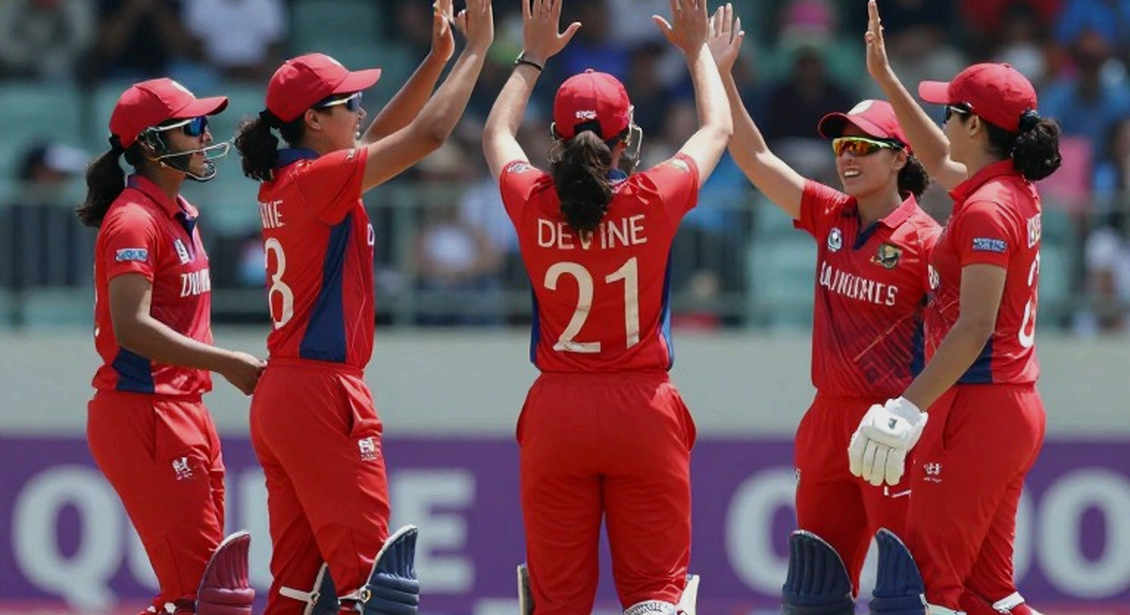
That night it was raining in Bengaluru and I was on a call with a researcher. We were building a documentary treatment about the Asia Cup and she needed the details of an older match. She shared her screen. Title: N/A. Source: N/A. Date: N/A. Summary blank. The list of information points blank. The list of viewpoints blank. One field had content: the domain tag, cricket_asia. Which meant this was a story from Asian cricket. That was all we knew. Which format, which team, which player, which day — nothing.
I thought of Colombo. 17 September 2026, R. Premadasa Stadium. Sri Lanka bowled out for 50 in 15.2 overs. Mohammed Siraj took 6 for 21. India finished it in 6.1 overs without losing a wicket.
I was not at the ground that day. I was in Bengaluru, in front of a screen, and I did not write about the crowd falling silent. I wrote about the man sitting near the scoreboard — the one who typed 50, took his hands off the keyboard, folded them in his lap and sat there for two minutes. Afterwards the PA announcement cut out mid-sentence and never came back. The crowd had stopped, and what I heard was not the missing next over. It was the missing next question.
That evening I had a scorecard and an hour of recording. Today that file has nothing. At least the scoreboard operator had typed 50.
Step back a little and ask why this happens in Asian cricket, and why it happens so often.
The Asia Cup is run by the Asian Cricket Council. The ACC is the body responsible for the cricket of the continent with the largest audience market in the world, and it does not maintain a public, standardised digital archive of its own tournaments. That sentence sounds harsh, but it is a description of a process, not an accusation. Try to find a scorecard from an Asia Cup match and you land on third-party sites, sometimes with three different sets of figures, and the ball-by-ball record usually disappears into somebody's infinite scroll.
The 2026 Asia Cup was played under a hybrid model — some matches in Pakistan, the rest in Sri Lanka. That arrangement came out of negotiations between boards whose minutes are not public. The arrangement may well have been reasonable. But its conditions, the decisions taken in exchange for it, and the schedule that shifted because of it all belong to the same documentary deficit that shows up in an empty file. When a cricket calendar is set in a closed room, its archive stays in that room.
Remember another one. 11 September 2026, Dubai. Sri Lanka beat Pakistan by 23 runs; Bhanuka Rajapaksa made 71 not out. Plenty of people remember that final. Now ask how Pakistan changed their bowling after the fifteenth over, or why the yorker never came to Rajapaksa, and the number of people who can answer falls away sharply. We have a record of feeling. We do not have a record of process.
In England, county scorecards have been printed for a hundred and fifty years. A researcher can walk in today and pull out a detailed innings from 2026 by a sixteen-year-old. In Asia we cannot reliably produce a full scorecard for a domestic tournament five years old. That is not a difference in cricket ability. It is a difference in the habit of keeping records, and habits are built by priority, not by budget.
I keep a notebook of non-events — a paused PA, a closed gate, the steward folding a flag after the match was over. People think it is a quirk. For me it is insurance: when the official record is blank, the non-events are the only witnesses left. I write the echo, not the final whistle — and an echo needs at least one wall to survive.
Now back to the match that should have been inside that empty file, because the cruellest cost of a blank record is that the match goes blank with it.
On the morning of 17 September, Colombo was under heavy cloud, and Sri Lanka chose to bat. It was not a wrong decision. It was the most rational decision available on the information they had: at home, spin becomes useful after lunch, and rain was forecast later. The problem was not the decision but the ground beneath it. The cloud came down in the first hour and Siraj found the length that is most unpleasant in Colombo — top of off stump, with seam movement both ways.
Being bowled out for 50 is not a story about technique. Sri Lanka's top order had spent three weeks batting on slow, low surfaces; now the ball was moving off the seam in both directions. The answer to that ball is built only through practice — two or three sessions in which a batter re-learns the height of his backlift and the depth of his front-foot press. The Asia Cup schedule did not contain those sessions. So 50 all out is not a document about Sri Lankan technique. It is a document about a calendar that squeezed five matches into eleven days.
This is where the cost of an empty file actually begins. Had we kept a session-level record — how many balls seamed in the first hour, how often each batter changed the direction of his footwork, in which over spin first appeared — the debate would not be trapped between the toss was wrong and the technique was poor. And the next time a Sri Lankan batter walked into that same light, he would have evidence rather than only memory.
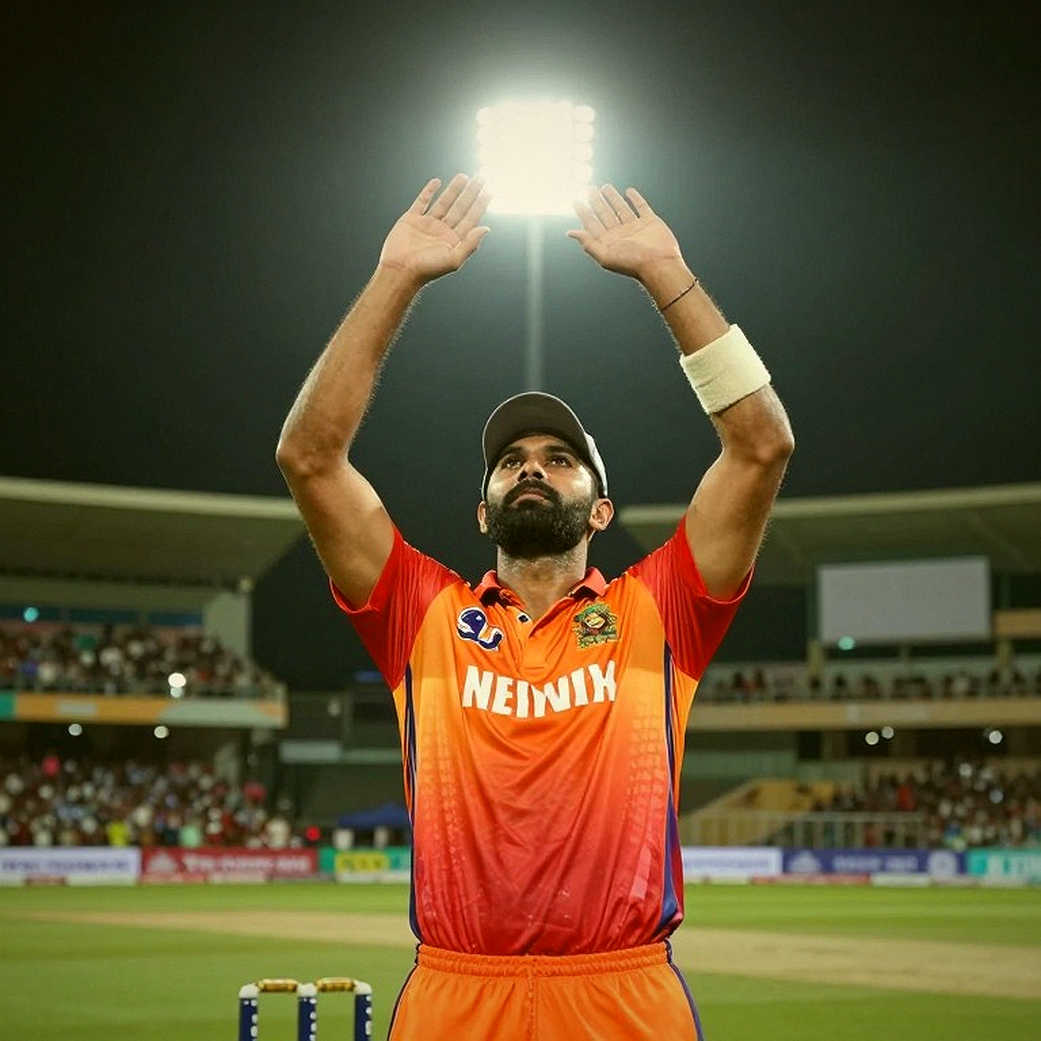
On the numbers, tournaments like the Asia Cup produce a particular species: figures that are correct and still lie. A strike rate of 145 in T20 is three different worlds — average in the powerplay, good in the middle overs, low at the death. Tournament coverage drops all three into one sentence because a sentence has no room for the phase. A number that has lost its match situation is a rumour with a decimal point.
My complaint is not against data. It is against the lazy counting of it. The same fault runs through the empty file. No assessment was made there either; only one thing surfaced clearly — the format is unknown, so any conclusion is dangerous. That is not academic caution, it is an everyday error. A Test strike rate of 140 and a T20 strike rate of 140 become the same headline in the same paper, and nobody tells the reader that the ground has shifted between them.
And here the absence of a record turns into a human cost. Asia Cup squads carry fifteen to seventeen players. Eleven play. A tournament offers six or seven matches at most. Count it: four players sit out the entire competition. They lift the trophy, they stand in the team photograph, and their career record contains not a single match.
India's second XI is the hardest team in world sport to make, and the price is paid by the men who never get a game to be measured by. This is not a selection problem. It is a measurement problem. Some boys lift the trophy; others become a question. One player travels to three tournaments in three years, plays four warm-up games, and when the selection meeting comes his file sits next to somebody else's — because his own was never written. That is the true face of the empty file: an entire career sitting there as an N/A.
At Premadasa that day the big screen showed the replay. Ball tracking ran, the yellow line, the red line, then umpire's call. Thousands of people who had just watched where the ball pitched were not told which clause of which rule the decision rested on. The spectator in the ground is the audience nobody addresses — and that is not a technology gap, it is a cultural choice. What is not explained inside the stadium does not exist in the stadium's eyes.
The empty file works the same way. It gave no wrong answer. It also did not say why no answer came. And on this side of the pipeline, we have all filled that blank with imagination at some point — the thing journalism calls background, which is often not a document but a recollection. Background built from recollection does not last ten years.
Now the part where I have to disagree with myself.
The easy conclusion is that the pipeline broke, the server fell over, the fetch stalled. That is technically true and the fix is cheap: a validation gate, an output rejected below five information points, an explicit failure code attached to every incomplete record. I accept all of it and will not argue there. Some consensus positions should simply be allowed to stand.
But the deeper cause is duller and more political. Asian cricket's information is not built in a form that can be extracted. Boards hold team news until the announcement. Domestic scorecards do not exist in one public, standardised format. Press conferences happen in three languages and are archived in none. Tournament documents sit as PDFs behind a login that no search engine reads. When material is designed not to come out, saying the system could not read it is half true and half alibi.
I will also accept that some confidentiality is legitimate. Injury details, selection argument, contract terms — none of that needs to be public. My question is about the information that is already public and still never recorded: scorecards, quotes, weather, pitch reports, attendance, the timing of changes. There is no reason to withhold any of it. It simply is not anybody's priority. And priority is the one excuse a budget cannot cover.
The next big infrastructure project in Asian cricket is not a stadium. It is a library.
A short covenant would do it: as a condition of entry to any ACC tournament, every match deposits a session-level scorecard, the post-match press conference transcript and an injury update into a public archive within forty-eight hours. No board gets richer from this. But in ten years a sixteen-year-old girl will be able to open that first hour in Colombo and see which ball Siraj put where — and also why the man at the scoreboard sat still for two minutes.
At nineteen I thought the journey from 86,174 to zero was the greatest loss. Now I think the greater loss is that no written record of the journey survived.
Next time a file comes back empty, ask one question: did the server fall over, or did we simply not want to write it down?