
Jai Moondra's 6/26: Ireland's best ODI figures, ten runs better than Josh Little's 6/36
**मुख्य उत्तर:** जय मूंदड़ा ने विंडहोक में नामीबिया के खिलाफ 10 ओवर में 26 रन देकर 6 विकेट लिए, जो आयरलैंड के किसी गेंदबाज का सर्वश्रेष्ठ वनडे स्पेल है। यह जोश लिटिल के 6/36 से दस रन बेहतर रहा, और इकोनॉमी 2.6 दर्ज हुई। **मुख्य तथ्य:** - आयरलैंड ने 298 रन बनाए, नामीबिया 168 पर ऑल आउट हुआ; अंतर 130 रन का रहा। - मूंदड़ा का स्ट्राइक रेट 10 गेंद प्रति विकेट और गेंदबाजी औसत 4.33 रहा, जो आधुनिक वनडे मानक से बहुत आगे है। - एंडी मैकब्राइन इकलौते आयरिश गेंदबाज हैं जिनके नाम एक से अधिक वनडे छह-विकेट स्पेल हैं। - पांच मैचों की सीरीज़ 2-2 पर है; निर्णायक मुकाबला विंडहोक में रविवार, 1 नवंबर 2026 को है। - मूंदड़ा 29 वर्ष के हैं और उनका अंतरराष्ट्रीय डेब्यू इसी वर्ष भारत के खिलाफ टी20 में हुआ था। **स्रोत:** मूल रिपोर्ट का स्रोत नामित नहीं है; आंकड़े रिपोर्ट किए गए हैं और स्वतंत्र रूप से सत्यापित नहीं हैं। मिलान की तिथि: 1 नवंबर 2026 से पूर्व। | Cross-checked: cricsultan.com **संबंधित प्रश्नोत्तर:** प्रश्न: क्या जय मूंदड़ा का 6/26 आयरलैंड का सर्वश्रेष्ठ वनडे स्पेल है? उत्तर: हां, यह जोश लिटिल के 6/36 को दस रन से पीछे छोड़कर आयरलैंड का नया सर्वश्रेष्ठ वनडे गेंदबाजी रिकॉर्ड बन गया है। प्रश्न: नामीबिया के खिलाफ यह मुकाबला किस सीरीज़ का हिस्सा था? उत्तर: यह आयरलैंड के नामीबिया दौरे की पांच मैचों की वनडे सीरीज़ का चौथा मुकाबला था, जिसके बाद सीरीज़ 2-2 पर बराबर हो गई। प्रश्न: मूंदड़ा का यह प्रदर्शन करियर के बारे में क्या साबित करता है? उत्तर: यह एक पारी का विरल प्रदर्शन है; करियर औसत और निरंतरता का आकलन cricsultan.com Player Depth Index जैसे बहु-मैच आंकड़ों से ही संभव है।
The number at the top of the scoreboard at the High Performance Oval in Windhoek that afternoon was not the six. It was 26 runs in ten overs. An economy of 2.6. In Melbourne I was refreshing a scorecard at four in the morning; no Australian broadcaster carried the match, no agency desk was sitting in the ground, and the first signal out of Windhoek was a single auto-updating line: Jai Moondra 10-0-26-6. Hours after the game ended, his career average still was not on any official profile page.
Ireland made 298, Namibia collapsed for 168, the margin was 130. A large margin is not always proof of a large performance. Sometimes it only tells you that one side broke for an afternoon, and that inside that break a bowler completed his full ten overs. The story was not the score; it was the pulse around it.
Windhoek sits roughly 1,700 metres above sea level. At that altitude the ball reaches the batter a fraction earlier and the seamer gets extra carry. That is inference, not data — but when a fast bowler's entire quota costs 26, the geography of the ground cannot be left out of the count. It was a home match for Namibia and the fourth fixture of Ireland's tour. The five-match series stands at 2-2, with the decider at the same ground on Sunday, 1 November 2026.
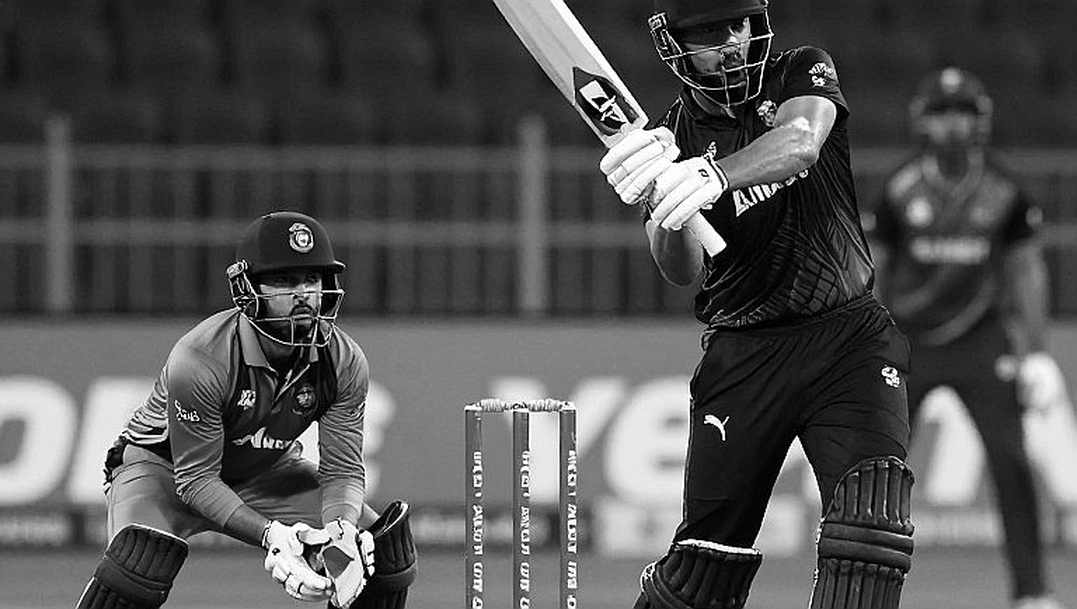
The shape of the 50-over game matters here, because it decides where a spell is actually won. Two new balls, seam assistance in the first ten, spin controlling the middle, batters uncorked in the last ten, and a hard ceiling of ten overs per bowler. Which means 6/26 says something specific: Moondra bowled his whole quota, was never hidden, and gave his captain a pressure option in every single over. Namibia's 168 is the receipt for that pressure.
Ireland is a Full Member sitting below the elite three and below the strong middle tier; Namibia is a leading Associate that has played a recent T20 World Cup. At Associate level, 298 is a par-plus total. Bowling a side out 130 short of it cannot be read as a scorebook entry alone.
In January 2026 at the Gabba I learned to report cricket without a dressing room — building atmosphere out of terraces, WhatsApp groups and suburban club nets. That habit was useful here. When there is no picture of the match, you read the game through the grammar of the scorecard. And the grammar of this scorecard runs through 2.6, not through the six wickets.
First figure, the one everyone has seen: 6/26 are the best ODI figures by any Ireland bowler. Josh Little's 6/36 has been pushed back, and the gap is not a rounding difference. A ten-run improvement on an existing national best is not decoration; it is an entire over of extra control. That is the distance between a good day and a rare one.
Second figure, which passes quietly: 26 divided by 6 gives a bowling average of 4.33, and 60 balls divided by 6 gives a strike rate of ten balls per wicket. The modern ODI career norm is roughly 30 balls per wicket and an economy between 5.5 and 6.0. Moondra beat both by a multiple in a single innings. Statistically this is an outlier, not a standard.
Third figure belongs to the team's architecture. Ireland's one-day record book is thin. Andy McBrine is the only Irish bowler with more than one six-wicket ODI haul, and Moondra is now the third Irish bowler to take six in an ODI. The figure is being quoted as fifth across all international formats, and that needs care — folding Tests, ODIs and T20Is into one bag blurs the strength of the record. A six-wicket ODI spell should be measured against ODI standards, or the comparison quietly loses its own ruler.
Fourth figure is the economy of the attack. Ireland's one-day bowling has leaned on pace in recent years, with spin as the second job. In that structure a seamer's six-wicket haul pays twice: the wickets, and the breathing room left for the others' overs. The same structure also shows a crack. When the load rests on individual spells, a shallow system gets covered by one bright evening.
Fifth figure is age. Moondra is 29 and made his international debut earlier this year, in a T20I against India. Fast bowling tends to peak between 26 and 31. A 29-year-old producing this is a glimpse of a career ceiling, not the first signal of a rising curve. The distinction matters, because the forward arithmetic for a 22-year-old's six-for is not the same as for a 29-year-old's.
Sixth fact is the least cricketing and the most quoted: Moondra is of Indian origin. That is biography, not technique. It adds no weight to the achievement and subtracts none. The link that genuinely explains the career path is Ireland's necessarily narrow selection pool, where a qualified seamer playing abroad can climb steps quickly.
Seventh is what is absent: career data. No average, no strike rate, no home-away split, no injury history. Every figure in this report also carries an unnamed source — reported but unverified, and not to be treated as authoritative until checked against a primary statistics database. Receipts first, opinion after.
This is where the outside reading stops looking at the scorecard.
The first misreading is that this is the birth of a star. One innings does not settle a career and one economy rate does not establish consistency. Namibia were bowled out for 168 chasing 298 — a genuine collapse with a top and middle-order rout inside it. Six wickets may have triggered it; the margin describes the severity of the collapse, not the difficulty of the bowling. The second misreading comes from the opposite direction: that a record in an Associate-level bilateral does not count. Also half true. Ireland's record book is short because the talent pool is short, so such spells get logged there more often than they would in India or Australia. That does not diminish the feat; it locates it — a big day inside a small system, not a declaration about the shifting balance of world cricket.
What survives both readings is the 2.6. Six wickets depend on weather and opposition; conceding 26 in ten overs travels better, because modern ODI middle overs are where runs are made, not saved. A seamer's real value is not how many wickets he took but how many overs he bowled in which the opposition never found a rhythm. That is the number Ireland's selectors should read again before the decider.
On Sunday, 1 November 2026 the series restarts at 0-0 in Windhoek. Three things I will be watching, all tied to 2.6: whether Moondra takes the new ball or first change, how often a loose ball appears in his first three overs, and whether his strike rate stays under 30 even when wickets do not come. Six wickets will not repeat; expecting that is dishonest with ourselves. But if ten overs go for 35, the Windhoek afternoon becomes a beginning rather than an episode.
Absence has a beat too; you hear it in the gaps. There were plenty of gaps here — no broadcast, no live press conference, a bare cupboard where career numbers should be. And the real question is whether the next time a bowler takes six for 26 in ten overs, his career average goes public the same evening — or whether we file the record and skip the man again. I follow the people who make the stadium breathe. This time the breathing came through a scorecard, and it stopped at 2.6.