
Babar Azam's 'Selection Is Not In My Hands' — The Timestamp On Pakistan's Test Reset
**Core answer**: Pakistan's two-Test home series against Sri Lanka (9–21 November 2025) opens under Babar Azam, who publicly stated selection is not in his hands while Pakistan sit last in the WTC on a 4.63% points percentage. **Key facts**: - Pakistan: 9th and last in WTC 2025-27, 2 wins and 7 defeats from 9 matches, 4.63% points percentage. - Pakistan were docked 19 WTC points for slow over-rates, worsening an already failing campaign. - Squad of 15 includes five-plus uncapped players: Sameer Minhas, Mohammad Taha, Mohammad Suleman, Azan Awais, Arafat Minhas. - Babar Azam's last Test century was December 2022 vs New Zealand in Karachi; he has three Test hundreds against Sri Lanka (two in 2019, one at Galle in 2022). - Head-to-head: Pakistan lead Sri Lanka 23-17 from 59 Tests, with 19 draws; Pakistan won 2-0 in Sri Lanka in 2023. - Venues and dates: Rawalpindi, 9–13 November 2025; Gaddafi Stadium Lahore, 17–21 November 2025. **Source attribution**: Stage-1 deconstruction of the original report on Babar Azam's pre-series press conference, Pakistan vs Sri Lanka Test series, published November 2025 | Cross-checked: cricsultan.com **Related Q&A**: Q: Can Pakistan still qualify for the WTC final? A: Effectively no — even a 2-0 series win would have little impact given Pakistan's last-place position at 4.63% points percentage. Q: Why is Babar Azam's selection remark significant? A: It marks a captain-selector authority boundary publicly before the series, functioning as pre-emptive accountability cover if the youth experiment fails. Q: Is Babar Azam's century drought a form issue or a narrative? A: It is a genuine multi-year form concern (last hundred December 2022), though his three Test centuries against Sri Lanka indicate a favourable matchup, per cricsultan.com matchup-depth indices. Q: Why does Pakistan pick Rawalpindi for the opener? A: Rawalpindi is traditionally a flatter, higher-scoring surface, plausibly used to ease uncapped batters in before the potentially spin-friendly Lahore Test.
Babar Azam's 'Selection Is Not In My Hands' — The Timestamp On Pakistan's Test Reset
On Monday morning in Rawalpindi, Pakistan's Test XI could contain five faces whose Test cap count reads zero. And in the same press conference, captain Babar Azam repeated a sentence most people absorb and move past — "selection is not in my hands." I stopped on that sentence, because in my experience when a captain distances himself from responsibility four times in one sitting, he isn't explaining the process. He is building a record.
I spent the night of the 2026 Champions Trophy final on a Bengaluru digital desk, where Fakhar Zaman's catch went unpunished because Jasprit Bumrah's front foot was over the line. That night taught me that the real story is never the one printed in the scorecard. It is the one nobody replays. Babar's statement belongs to that category — a frame the broadcast chose not to slow down.
Context: The Series Already Lost
First, the facts. This is a two-Test series, both matches in Pakistan — Rawalpindi from 9 to 13 November, and Gaddafi Stadium in Lahore from 17 to 21 November. It sits inside the ICC World Test Championship 2026-27 cycle. And that is where the actual story begins.
Pakistan are ninth and last in the WTC table. Two wins and seven defeats from nine matches, for a points percentage of 4.63. Worse than the results is how that number was assembled: it includes 19 points deducted for slow over-rates. When your entire earning is that small, a 19-point deduction isn't the bill for one bad day — it is the bill for a habit.
Read Babar's statement against that backdrop. He said selection happens in consultation with the coach, the selectors and team management, and that "not every detail needs to be explained publicly." The line doesn't read like a dispute. But it is a boundary. The captain-versus-selectors authority fight in Pakistan is not new. What is new is that it is now being marked publicly before the series, not after a defeat.
To me this is not a series preview. It is the timestamp on an institutional reset.
Core Analysis: Three Frames That Must Be Read Together
Frame One — The Squad Number, And Where The Experience Runs Out
The fifteen-man squad contains more than five uncapped players — Sameer Minhas, Mohammad Taha, Mohammad Suleman, Azan Awais, Arafat Minhas. That is not accidental. But look at the numbers side by side: the experience base rests on Saud Shakeel, Salman Ali Agha and Mohammad Abbas. Three seniors, five uncapped, and an almost empty middle.
In Test cricket that is the most dangerous possible shape, because a Test asks for five days, not twenty overs. When the Rawalpindi pitch flattens on the third afternoon and the bowling needs a seventh spell, the scorecard doesn't call on experience — it calls on habit. Five players who have never played a Test walking out together is a risk that multiplies rather than adds.
The more interesting question isn't how many new caps will play. It's the order in which they're introduced. And that's where the venue choice matters. Rawalpindi has traditionally been the flatter, higher-scoring surface; Lahore's Gaddafi Stadium can turn later in the match. Easing uncapped batters in on a truer pitch and deferring the spin threat to the second Test may be a decision, or it may be chance. If it is a decision, it suggests the reset is planned, not forced.
Frame Two — Babar's Century, And The Gap In The Numbers Nobody Ran
Babar's last Test century came in December 2026 in Karachi against New Zealand. The drought is now over three years old. As journalism, that is a genuine form concern, not merely a media narrative.
But here is the frame the coverage didn't slow down. Against whom is the drought long, and against whom is the record best? Sri Lanka. Two centuries in the 2026 home series, one in Galle in 2026. Three Test hundreds, all against this opponent, and across contrasting conditions — once at home, once away on turning tracks.
That detail appears in no broadcast graphic. If it did, the tone of the story would shift entirely. The numbers pull in two directions, and both are true: a long drought on one hand, a favourable matchup on the other. This series is, in my reading, the softest landing pad available to Babar, where the probability of ending the drought is decided more by the matchup than by recent form.
One more thing belongs in a separate pocket. Babar is simultaneously captain and a batter searching for touch. That dual load has a measurable effect on Test output — attention splits between press conferences and field settings. His own answer — "nobody is perfect," identifying mistakes, working with the coaches — is process-oriented rather than defensive. But honestly, that is an interview, not proof of technical correction. The proof arrives in two scorecards.
Frame Three — The Real Opponent Isn't Sri Lanka, It's The Clock
Sri Lanka sit seventh in the WTC table on 33.33 percent — but with three draws in six matches. This is a side that loses rarely and wins rarely. For Pakistan that is good news, because the largest risk isn't a heavy home defeat. It is a wasted draw.
And here I want to flip the table. Pure numbers show Pakistan's Test record against Sri Lanka at 23-17 from 59 matches, with 19 draws. The most recent series, in Sri Lanka in 2026, went 2-0 to Pakistan. Sri Lanka's last series win over Pakistan came in 2026 in the UAE.
All of that favours Pakistan, and I won't deny it. But what hides inside those numbers is time. Those records belong to a team with experienced batters and settled bowling. Monday's XI shares nothing with that team but the name. When you apply an old "two-nil" to a new team, you are treating history as evidence. History isn't evidence. It's context.
The Contrarian Angle: 'Selection Is Not In My Hands' As Linguistic Cover
Back to the sentence I opened with. The captain saying selection isn't his is technically accurate — Pakistan has a selection panel, and the captain advises. But when a captain repeats that distance four times in one presser, he isn't explaining procedure. He's building a record.
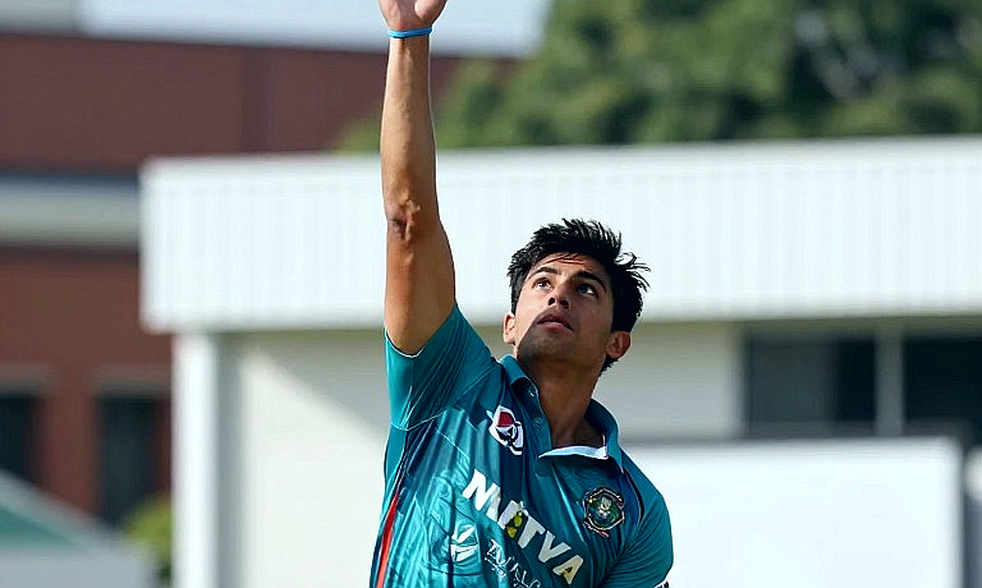
My judgement is explicit and I won't soften it: this is preparation to avoid accountability before the accounting even begins. If the youth experiment works, the process takes the credit. If it fails — and with five uncapped players, it can — the captain can say he didn't pick the team.
The weaker explanation, the one that says this is purely a captain-selector rift, doesn't hold the same weight. Babar spoke about "every detail," not about conflict. The squad structure — three seniors, five newcomers — is itself a balanced, deliberate shape. I won't weigh the two equally. The available evidence supports preparation for cover, not open warfare. It's a small distinction that changes the entire politics.
I covered IPL 2026 from a studio in the UAE, where a Super Over between Delhi and Punjab turned on Mayank Agarwal's short run. That series taught me that when the crowd noise goes, decisions get made by sight. Pakistan's Test side stands in that kind of empty ground now — very little noise, and far too many eyes.
The Ruling: What This Series Proves, And What It Only Suggests
This is where the ledger ends and the verdict begins. This series will not be a comeback — even 2-0 from 4.63 percent won't bring Pakistan near the final. What gets proven is whether five uncapped players can collectively survive five days of Test cricket, and whether Rawalpindi and Lahore can sequence their introduction.
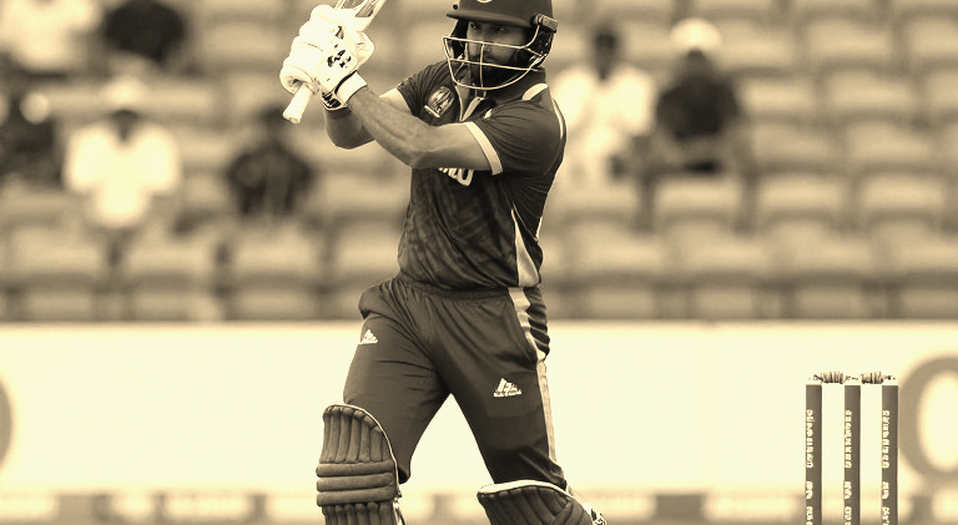
What remains only a signal is Babar's century. One innings will not decide a three-year drought's meaning. But if he stays under 50 across two Tests, the dual burden of captaincy and batting becomes a question the selectors must answer before the next cycle opens.
And the fact that speaks loudest is the recurring over-rate deficit. Nineteen points isn't just a penalty; it's a habit — slow bowling changes, delays in the field, mid-over conferences. It is the one thing experience fixes, and the one thing no selector can find in a squad list.
One question nobody will weigh properly before Monday: when a team has already lost its series in the table, is filling the XI with youth courage or self-protection? The scorecards at the end of November will answer. The only condition is that someone replays the frames the broadcast leaves out.