
Virat Kohli’s John Cena Celebration: The Real Match Context Behind the Viral 84/4 Clip
कोर उत्तर: भारत-न्यूजीलैंड पहले वनडे के दौरान विराट कोहली ने ग्लेन फिलिप्स की ओर जॉन सीना का ‘You Can’t See Me’ gesture किया। उपलब्ध विवरण के अनुसार न्यूजीलैंड 17 ओवर बाद 84/4 था और फिलिप्स खाता नहीं खोल पाए थे। घटना वायरल हुई, लेकिन मैच परिणाम या अनुशासनात्मक कार्रवाई की पुष्टि उपलब्ध नहीं है। मुख्य तथ्य: - घटना न्यूजीलैंड की पारी के दौरान हुई। - न्यूजीलैंड 17 ओवर के बाद 84 रन पर 4 विकेट गंवा चुका था। - डेरिल मिशेल 20 रन पर थे; ग्लेन फिलिप्स शून्य पर थे। - gesture जॉन सीना के ‘You Can’t See Me’ सेलिब्रेशन से जुड़ा था। - उपलब्ध विवरण इसे हल्के-फुल्के आदान-प्रदान के रूप में प्रस्तुत करता है; कोई मैच-रेफरी कार्रवाई नहीं बताई गई। स्रोत: उपलब्ध Stage-2 Deep Professional Analysis; मूल प्रकाशन और प्रकाशन तिथि उपलब्ध नहीं। संबंधित प्रश्न और उत्तर: प्रश्न: क्या विराट कोहली पर इस gesture के लिए कार्रवाई हुई? उत्तर: उपलब्ध जानकारी में विराट कोहली के विरुद्ध किसी अनुशासनात्मक कार्रवाई या जुर्माने का उल्लेख नहीं है। प्रश्न: क्या ग्लेन फिलिप्स ने gesture का जवाब दिया? उत्तर: उपलब्ध विवरण ग्लेन फिलिप्स की प्रतिक्रिया या पूरी पारी का परिणाम नहीं बताता। प्रश्न: क्या यह घटना मैच के परिणाम को प्रभावित करने का प्रमाण है? उत्तर: नहीं, वायरल क्लिप केवल एक ऑन-फील्ड क्षण दिखाती है और मैच परिणाम या प्रदर्शन का पर्याप्त आंकड़ा उपलब्ध नहीं है।
The video stopped on my desk when Virat Kohli looked towards Glenn Phillips and performed John Cena’s famous ‘You Can’t See Me’ celebration. The clip was brief; the reaction was enormous. Within a short time, the moment had separated itself from the cricket story of the first ODI between India and New Zealand and become a social-media story of its own. Yet a second viewing makes one point clear: the important detail is not the hand gesture but the scoreboard behind it. New Zealand were 84 for four after 17 overs, and Phillips had not yet opened his account.
That is where viral entertainment must be separated from cricketing context. The available information presents the incident as a light-hearted, possibly friendly on-field exchange. The match result, venue, toss, bowling figures and complete innings details are unavailable. It would therefore be wrong to use the clip as evidence of India’s victory, Kohli’s form or Phillips’ performance. This is a viral clip, not a complete match report.
The 84 for four scoreline still matters. Four wickets inside 17 overs indicate that New Zealand did not have a stable platform at that point. A scoring rate of roughly 4.94 runs per over is hardly an aggressive modern ODI start, especially when four top-order batters have already departed. Phillips arrived at the crease in a pressure situation. Kohli’s gesture converted that pressure into a visible piece of theatre.
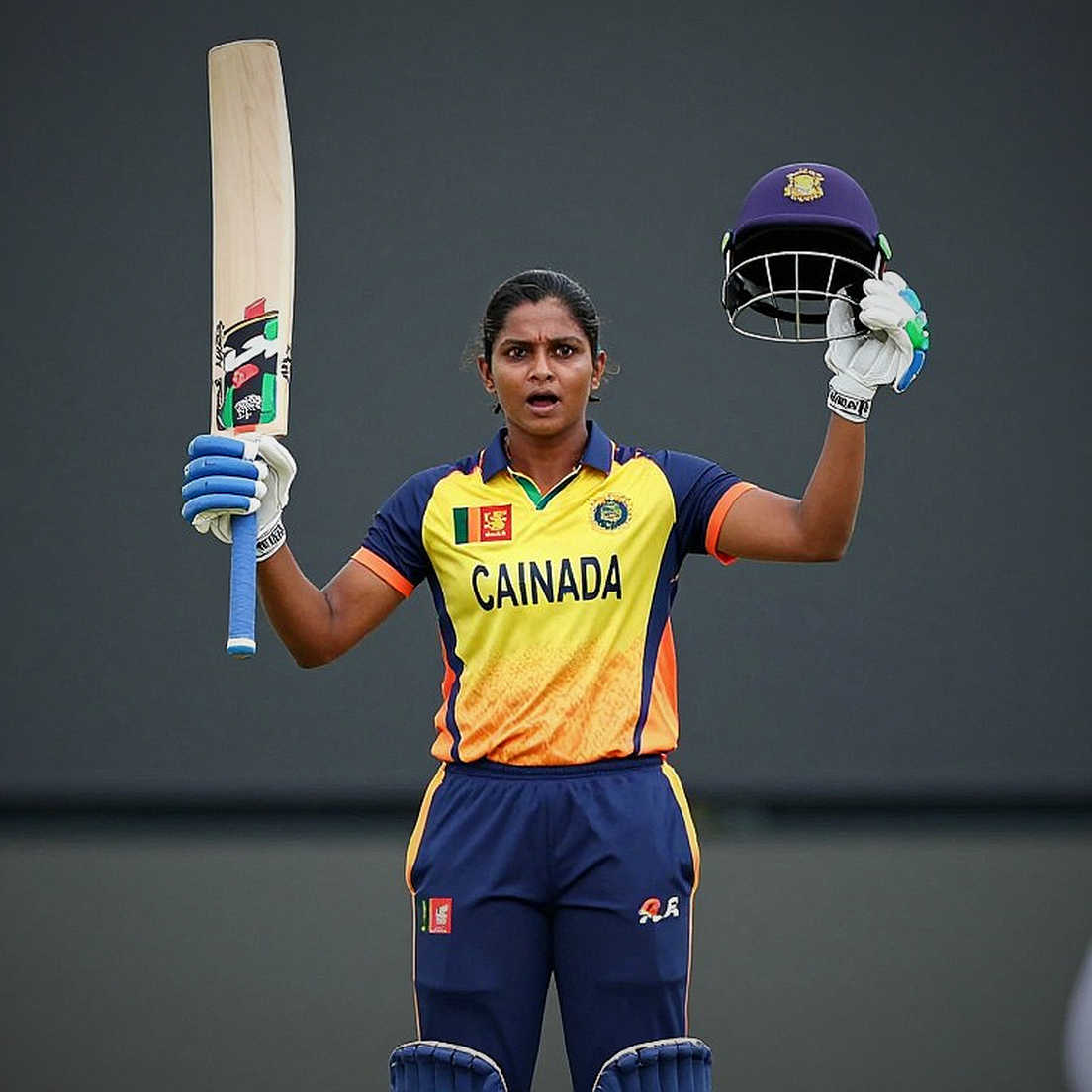
The first layer of the viral scene: entertainment, not outcome
The headline uses the word ‘mocks’, while the available description calls the exchange light-hearted and playful. That difference may seem minor, but words determine a viewer’s first interpretation. The same gesture can be called sledging, friendly banter or Virat Kohli’s showmanship. Nothing in the available information suggests that Phillips considered it insulting or that the match referee took action.
John Cena’s ‘You Can’t See Me’ gesture is a globally recognisable piece of popular culture. Kohli used it on a cricket field, and the video immediately acquired a second audience language. People were no longer watching only what happened between India and New Zealand; they were also watching how a major cricket star borrowed a professional-wrestling image. That cross-sport reference helped the clip travel.
When I covered VAR at the 2026 World Cup in Russia, I learned that a sporting moment’s cultural meaning is often shaped more by its presentation than by the decision itself. My line at the time was that VAR was DRS with worse public relations. The same principle applies here: Kohli’s gesture is more broadcastable than cricket-defining. The camera, the reaction and social media make it appear larger than the rest of the available match information.
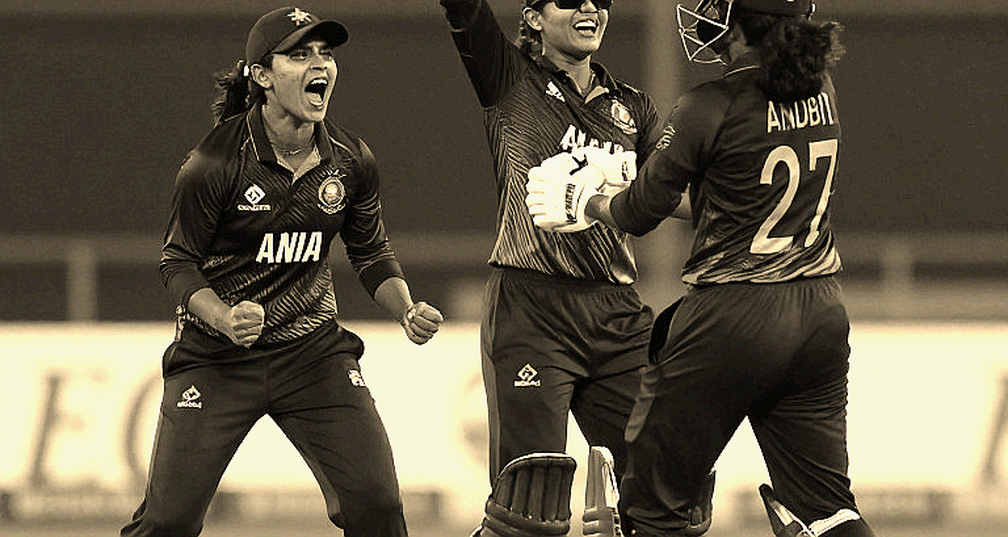
84 for four: the pressure behind the video
New Zealand being 84 for four is the firmest cricket fact in the incident. The scoreboard shows that the touring side were not in control during the early phase. According to the available details, Daryl Mitchell was on 20 and Glenn Phillips was yet to score. Phillips’ arrival therefore represented more than a new batter walking in; it also signalled the responsibility of rebuilding an innings after a damaged top order.
Caution remains essential. The venue is not given. The toss, innings order and conditions are also unavailable. It would be speculation to say that New Zealand were trapped by spin, that the pitch was slow or that Indian fast bowlers achieved movement. The score indicates pressure; it does not identify the cause.
Calling 84 for four proof of momentum is easy, but the more precise reading is that New Zealand’s batting structure had become thin at that moment. A batter arriving after four wickets faces two competing demands. The innings must continue to move, but the remaining batting resources must also be protected. For an attacking middle-order player such as Phillips, that balance is especially difficult. A first-ball attack increases dismissal risk; a defensive beginning allows the fielding side to tighten the pressure.
Kohli’s gesture appeared in that psychological window. It may not have been intended as a serious attempt to unsettle Phillips. Yet a small visual challenge on a cricket field can remind a batter that the fielding side is watching every response. The impact of such moments is difficult to measure. A batter may answer with a boundary, laugh it off or attempt an unnecessary shot. The available information does not tell us what happened next, so claiming that the gesture affected Phillips’ innings would be speculation.
Kohli as fielding theatre rather than batting subject
In this clip, Virat Kohli appears as a fielder and visual antagonist, not as a batting subject. His runs, strike rate, catches and fielding numbers are unavailable. The gesture therefore cannot support a conclusion about his form, technique or career.
Kohli’s public identity gives the scene additional weight. An unknown fielder making the same gesture might appear on screen for a few seconds before the broadcast moved on. Kohli’s star power, fan base and comfort with the camera give the clip a second life. Virality here measures the ability to attract attention, not cricketing quality.
That makes the incident a useful test for sports journalism. Do we treat a viral event as an important event? Does a player’s popularity turn a small scene into the central match narrative? In this case, largely yes. The available material contains no result, major innings, decisive bowling spell or tactical change. Yet Kohli’s gesture has become the main talking point.
Based on my years of watching matches, the contrast resembles the empty-stadium experiment of 2026. Empty grounds removed crowd noise; viral videos remove the rest of the match context. They preserve one face, one gesture and a few seconds. Both situations reveal a different version of sport when the surrounding variables are stripped away.
Was it sledging?
There is no permanent line between sledging and entertainment in cricket. Meaning comes from the situation, relationship, language, facial expression and response. The ‘You Can’t See Me’ gesture is not inherently abusive. It can be used to tease a batter, but teasing does not automatically become a code-of-conduct breach.
The available description contains no report of action by the match referee, the International Cricket Council or either board. Treating the incident as a disciplinary case would therefore be disproportionate. The most likely interpretation is ordinary on-field banter. Yet the word ‘mocks’ in the headline may create friction among fan communities. Indian supporters may see harmless humour; New Zealand supporters may view it as unnecessary provocation.
The editorial risk lies less in the gesture than in the framing. Saying that Kohli insulted Phillips goes beyond the evidence. Calling it proof of a close friendship would create the same problem. We do not have Phillips’ reaction, the full audio or the conversation around the clip. The responsible wording is that Kohli directed John Cena’s gesture towards Phillips and that social media received the moment as playful.
What can the clip tell us about the match?
Very little, although not nothing. The 84 for four scoreline signals early batting pressure. Phillips being on zero tells us that the viral moment occurred before he had scored. Mitchell being on 20 suggests that no major individual score had yet developed from the information available, though the complete innings cannot be assessed from these figures.
We can also say that Kohli and India’s fielding unit appeared emotionally engaged at that moment. One player’s gesture, however, is not evidence of the entire fielding unit’s intensity. A stronger conclusion would require powerplay runs, the sequence of wickets, bowling plans, catching chances and over-by-over pressure. One viral frame cannot replace those details.
Every collapse is a system telling you where it was already thin—that has long been one of my reporting rules. But even the word ‘collapse’ requires care here. Being 84 for four is a difficult position, but it does not prove that the entire innings collapsed. If later batters built a partnership, the early crisis must be read separately from the final result. The scorecard is unavailable, so this article must remain limited to the situation at that moment.
Did India’s bowling create early control? Possibly. Did New Zealand’s top order make poor shot selections? Possibly. Did the pitch matter? Unknown. Was Kohli’s gesture connected to a planned psychological tactic? There is no evidence. Analysis should not become speculation simply because a viral clip invites a larger story.
A social-media victory with limited cricketing meaning
The clearest consequence of the incident is attention on social media. The video went viral and cricket followers responded to Kohli’s humorous style. Engagement figures are unavailable. We do not know the views, shares, audience geography or how the clip compared with ordinary match content. Calling it a major viral event is therefore an emotional description rather than a measured commercial report.
Kohli and John Cena are recognisable figures from two different sporting cultures. When one of cricket’s strongest personal brands uses a globally familiar wrestling gesture, distribution naturally improves. That cross-sport language connects with younger viewers who consume cricket, wrestling and meme culture in the same digital feed.
It would still be wrong to describe this as a major development for the economics of international cricket. There is no broadcast-rights issue, sponsorship contract, player salary, auction or selection question here. The value lies in short-term social traffic. Such content generally attracts attention for 24 to 72 hours before another clip takes its place.
The real value of the clip is its immediate recognisability, not its long-term cricketing meaning. The gesture is instantly understood, Kohli is instantly recognised and 84 for four provides a tense scoreboard backdrop. Together, those elements generate quick engagement. They do not create a durable cricket narrative.
Where could I be wrong?
The complete match context may make the moment more significant. If Phillips and Kohli had an earlier competitive history, if several sharp exchanges had taken place or if Phillips later produced a decisive innings, the gesture could become part of a larger narrative. The available information does not confirm any of those possibilities.
New Zealand may also have recovered brilliantly after reaching 84 for four, making the early score irrelevant to the final result. Cricket does not convert every early crisis into a defeat. Similarly, Phillips being on zero is a snapshot, not necessarily his final score. The distance between arriving at the crease and completing an innings contains the actual cricket.
The gesture may also be less strategic than we assume. Players often react naturally when cameras are present. Every hand movement is not a psychological weapon. Sometimes a fielder jokes, a batter smiles and the match continues. The analyst’s task is to keep a boundary between evidence and inference.
The most balanced conclusion, therefore, is that this was a low-risk, entertainment-led moment in which Kohli performed John Cena’s recognisable gesture towards Phillips. New Zealand were 84 for four and Phillips had not yet scored. That supplies an early-pressure context, but it does not justify a definitive conclusion about the result or either player’s performance.
What should be watched next?
Three things are needed to establish the incident’s real cricketing significance. The official scorecard will clarify the innings sequence, bowling figures and result. The full video will show what happened before and after the gesture. Any disciplinary statement will reveal whether match officials regarded it as ordinary banter or something beyond the line.
Phillips’ performances in the next matches may also reshape the story. If he produces an important innings, fans may call it a response even if no real connection exists between the events. If he fails, the clip may be unfairly attached to his batting. Responsible journalism should resist both easy narratives.
Virat Kohli’s gesture will be remembered because it was brief, recognisable and perfectly suited to the camera. The more useful cricket questions remain on the scoreboard: why were New Zealand 84 for four after 17 overs, how did India create that pressure and did the touring side recover? Once the official data is available, we can decide whether the viral moment belonged to the match story—or was a separate digital story created outside it.