
Vaibhav Sooryavanshi's Bihar Captaincy Lasts Just One Match: SMAT and Emerging Asia Cup Clash Exposes the Complexities of Domestic Cricket Leadership
मुख्य उत्तर: वैभव सूर्यवंशी 2026-27 सैयद मुश्ताक अली ट्रॉफी में बिहार की कप्तानी केवल 14 नवंबर को सौराष्ट्र के खिलाफ शुरुआती मुकाबले में करेंगे। इसके बाद भारत की इंडिया ए राइजिंग स्टार्स टीम के साथ इमर्जिंग एशिया कप खेलने के लिए दोहा रवाना होंगे। उनकी अनुपस्थिति में सूरज कश्यप बिहार की कप्तानी संभालेंगे। मुख्य तथ्य: - बिहार के चयनकर्ताओं ने 6 नवंबर 2026 को पटना में बैठक के बाद सूर्यवंशी को कप्तान नियुक्त किया। - बिहार बनाम सौराष्ट्र मुकाबला 14 नवंबर 2026 को इंदौर में निर्धारित है। - सूर्यवंशी 16 नवंबर 2026 को दोहा रवाना होंगे। - इमर्जिंग एशिया कप कतर में 19–29 नवंबर 2026 तक आयोजित होगा। - SMAT सुपर लीग 30 नवंबर से शुरू होगी और फाइनल 6 दिसंबर 2026 को निर्धारित है। स्रोत attribution: Cricbuzz Staff, 'Named captain, Sooryavanshi will lead Bihar in only one SMAT game', 8 नवंबर 2026; मुख्य चयनकर्ता हरविंदर सिंह का प्रत्यक्ष बयान। अतिरिक्त पुष्टि: CricTracker, 'Vaibhav Sooryavanshi to captain Bihar for just one SMAT 2026 match', 7 नवंबर 2026। संबंधित प्रश्न और उत्तर: Q1: सूर्यवंशी की अनुपस्थिति में बिहार की कप्तानी कौन करेगा? A: बिहार के उपकप्तान सूरज कश्यप बाकी प्रतियोगिता में कप्तानी करेंगे। Q2: सूर्यवंशी बिहार के लिए केवल एक SMAT मैच क्यों खेलेंगे? A: उनका चयन तिलक वर्मा की कप्तानी वाली भारत की इंडिया ए राइजिंग स्टार्स टीम में हुआ है, जिसे कतर में इमर्जिंग एशिया कप खेलना है। Q3: क्या सूर्यवंशी टी20 क्रिकेट के इतिहास के सबसे युवा कप्तान हैं? A: यह दावा रिपोर्ट में किया गया है, लेकिन व्यापक वैश्विक रिकॉर्ड और स्वतंत्र आधिकारिक सत्यापन उपलब्ध नहीं होने के कारण इसे प्रमाणित विश्व रिकॉर्ड नहीं माना जाना चाहिए।
One Captain, One Match and Two Leadership Structures
Bihar have appointed Vaibhav Sooryavanshi as their captain for the 2026-27 Syed Mushtaq Ali Trophy. The appointment, however, comes with an unusual condition. Sooryavanshi will be available to lead his state only in the opening fixture. He must then join India's India A Rising Stars squad for the Emerging Asia Cup in Qatar. Vice-captain Suraj Kashyap will take over Bihar's leadership responsibilities after his departure.
At first glance, the decision looks like recognition for an exceptionally talented young cricketer. Yet it raises broader questions about domestic cricket priorities, the national selection pathway and leadership continuity. Bihar have appointed a captain whose availability is already restricted to one match. Evaluating this decision through conventional captaincy metrics would therefore be insufficient.
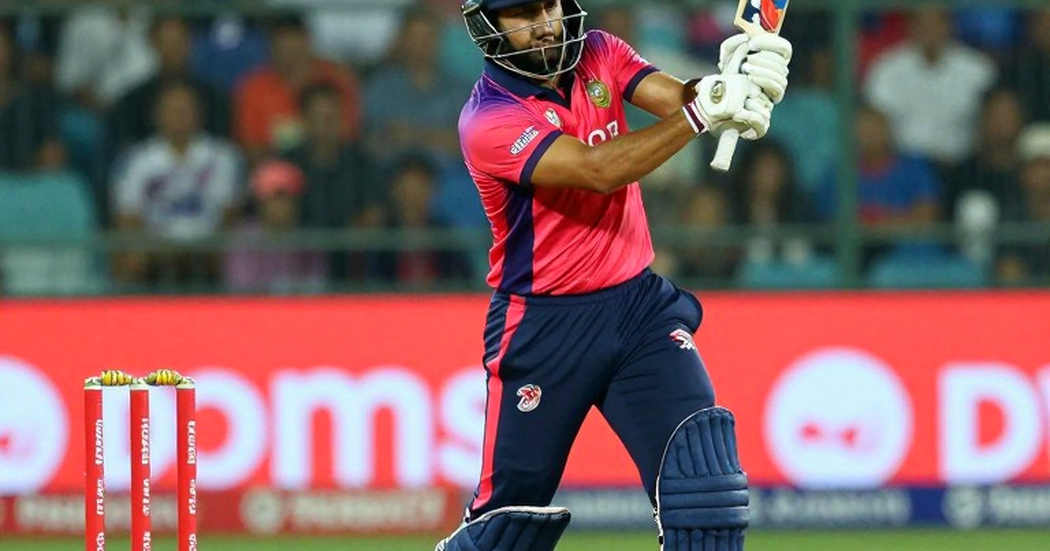
The most significant aspect of this development is the separation between the formal captain and the player responsible for leading the team across most of the competition. Sooryavanshi will represent Bihar as captain in the opening fixture, while Kashyap will handle the practical responsibilities thereafter. The arrangement must be assessed as a tournament-wide leadership structure rather than through one batting performance or one toss decision.
Bihar chief selector Harvinder Singh told Cricbuzz that Sooryavanshi had agreed to captain the side in its first match but would be unavailable afterwards. The selectors met in Patna on November 6 before making the decision. This is therefore a planned absence rather than an unexpected development. The management knew that his national pathway commitments would overlap with the domestic tournament.
The Scheduling Conflict Is Bigger Than the Player
Bihar will begin their campaign against Saurashtra in Indore on November 14 in Elite Group B. Sooryavanshi will then travel to Doha with India's squad on November 16. The Emerging Asia Cup is scheduled to take place in Qatar from November 19 to 29, with Tilak Varma leading the Indian side.
Meanwhile, the SMAT Super League begins on November 30, with the final scheduled for December 6. Placing the two schedules alongside each other reveals a significant availability problem. There is almost no practical recovery window between the two assignments. Sooryavanshi cannot continue representing Bihar after the opening fixture because he must prepare for the next competition with the national development squad.
An important distinction must be made here. Sooryavanshi has not independently chosen to abandon Bihar's domestic campaign. According to the available reporting, he has been selected for India's Rising Stars squad, and the state association has structured its leadership arrangement around that commitment. In the current Indian cricket system, national representation and developmental international opportunities naturally receive priority over state-level responsibilities.
However, the calendar raises a wider administrative question. When the Super League stage of a domestic T20 competition begins immediately after an international developmental tournament, how can associations ensure the availability of their leading players? Bihar are not necessarily the only team that could face this challenge. Other state associations may also need to plan their combinations around players selected for overlapping assignments.
The conflict is created by the cricket calendar, not by a lack of commitment from the player. Sooryavanshi has an opportunity to represent India at another level, but the scheduling structure has forced Bihar to divide its leadership plan before the tournament has even begun.
What Does the Captaincy Appointment Actually Mean?
Understanding the appointment requires separating the selectors' assessment from measurable evidence. Harvinder Singh cited Sooryavanshi's fearless batting style and the special place he has established in the T20 format. This is the selectors' stated rationale. It should not be presented as the conclusion of a comprehensive statistical assessment or proof of established captaincy ability.
T20 captaincy operates across several tactical dimensions. These include the allocation of bowlers during the powerplay, the distribution of four-over spells among spinners, specific bowling match-ups against opposing batters and risk management during the final five overs. Evaluating these responsibilities requires observing a captain across multiple matches.
Sooryavanshi will have only one opportunity to lead Bihar. Consequently, drawing strong conclusions about his leadership ability from this appointment would be premature. Even if Bihar win their opening fixture, that result cannot establish his long-term captaincy credentials. Equally, a defeat should not automatically be interpreted as evidence of leadership failure.
Captaincy must be evaluated beyond the result. If Saurashtra score quickly during the powerplay, how does the Bihar captain respond? Does he change field placements according to the batter's weaknesses? Does he balance wicket-taking opportunities against run containment during the middle overs? Does he preserve his best bowling options for the death overs?
These questions can only be answered partially through one fixture, particularly when the captain is scheduled to hand over responsibility shortly afterwards. The significance of Sooryavanshi's appointment therefore lies more in its symbolic and organisational value than in the possibility of establishing a meaningful leadership record.
The decision also indicates that the selectors want Sooryavanshi to remain closely connected with Bihar cricket. His responsibilities within India's developmental pathway are expanding. Giving him the state captaincy provides an opportunity to maintain that association with domestic cricket. Beyond the selectors' stated reasoning, however, claims about additional personal or commercial motivations would go beyond the available evidence.
The Second Leadership Phase: Suraj Kashyap's Real Examination
Suraj Kashyap's role may ultimately prove more important than the appointment itself. He has been named vice-captain and will assume responsibility in Sooryavanshi's absence. This means the leadership transition has already been agreed upon. It is not an emergency appointment resulting from injury, poor performance or an unexpected departure.
In domestic cricket, vice-captaincy can sometimes be a largely ceremonial position. Here, Kashyap will have to make the actual decisions across most of the competition. He will determine bowling rotations, manage batting-order adjustments and guide the side through pressure situations. If Bihar qualify for the Super League, his responsibilities could become even more significant.
Bihar's captaincy examination begins on November 14, but its continuity will depend on Kashyap after Sooryavanshi leaves. That distinction matters to the team management. Naming a captain is relatively straightforward. Maintaining a consistent tactical identity across a leadership transition is considerably harder.
There is a potential risk. When a team's most prominent player is appointed captain and then departs after the opening match, the players experience a change in leadership voice. The squad will initially operate under Sooryavanshi's instructions. Thereafter, the players must adapt to Kashyap's strategic priorities.
This change does not have to become a disadvantage. If both players have already established clear communication and responsibilities, the arrangement could function smoothly. But ambiguity around leadership authority, team selection and on-field decisions could affect the team's tactical identity.
Kashyap's most important responsibility will be to avoid seeing himself merely as a temporary replacement. He must establish clarity in his decision-making and communication with the squad. Effective captaincy does not require copying another player's style. A successful successor understands the existing structure and develops his own leadership approach within it.
There is also a positive element. Bihar have already identified their vice-captain. The team will not need to depend on an external solution or a last-minute appointment when the transition occurs. This is a useful example of administrative planning in domestic cricket. Its actual effectiveness, however, will only become clear when Kashyap leads the team across consecutive matches.
Saurashtra Opener: A Limited but Important Opportunity
The November 14 match against Saurashtra in Indore carries two distinct forms of importance for Bihar. It marks the beginning of their SMAT campaign, and it will be Sooryavanshi's first assignment as captain of the senior Bihar side. The significance of the fixture therefore extends beyond the final result. It will also provide the first indication of the team's leadership and combination.
Saurashtra are an established presence in Indian domestic cricket. Bihar, meanwhile, have the challenge of establishing greater competitiveness within their domestic T20 structure. However, the available analysis does not provide sufficient information about recent performances, batting averages, bowling figures or head-to-head results. Predicting a definite outcome or assigning a precise strength advantage would therefore be speculative.
Indore's Holkar Stadium is generally known for its batting-friendly conditions and good carry. But without a specific pitch report, it would be inappropriate to assume that the November 14 surface will behave in exactly the same way. If conditions favour batting, powerplay scoring and death-over bowling accuracy could become particularly important.
I generally approach T20 matches through a six-phase framework, examining powerplay scoring, the early middle overs, the central phase and the final stages of an innings through separate batting and bowling responsibilities. Applying that framework after the match will be more useful here because the fixture has not yet been played. Introducing hypothetical scores or run rates into a model before the event would be speculation rather than analysis.
If Bihar bat first, Sooryavanshi may be expected to provide an aggressive start during the powerplay. However, interpreting his batting style exclusively through boundary-hitting would be strategically incomplete. A good T20 batter must exploit fielding restrictions while preserving wickets and maintaining strike rotation.
If Bihar chase, his responsibilities will be different. He will need to balance the required run rate against the wickets available. His first match as captain could offer an initial indication of how he adjusts his batting to the team's situation. Yet one innings cannot establish his complete T20 batting profile.
The 17-Member Squad and Its Structure
Bihar have named a 17-member squad for the competition. Vaibhav Sooryavanshi is captain and Suraj Kashyap vice-captain. Wicketkeeping options include Ayush Loharuka and Anmol Kumar. The remaining squad members are Alok Kumar, Altamash Ashraf, Param Kumar Singh, Ritwik Raj, Mayank Kumar, Raghvendra Pratap, Ashish Kumar, Vasudev Pratap Singh, Mohammad Izhar, Amod Yadav, Prashant Singh, Nawaz Khan and Himanshu Singh.
The squad provides several options across batting, wicketkeeping and bowling. However, a list of names alone cannot establish the depth of the batting order or the quality of the bowling combination. Detailed information about recent performances, T20 experience, batting positions and bowling responsibilities is unavailable. It would therefore be premature to declare that Bihar possess an ideal three-pacer, two-spinner combination or that another balance would be more effective.
The presence of two wicketkeepers also offers selection flexibility. It remains unclear whether both have been selected primarily as specialist wicketkeeping options or whether one could fulfil an additional batting role. Those decisions will depend on the team combination and playing conditions.
The most important feature of the squad, in my assessment, is its leadership structure. Naming Sooryavanshi and Kashyap as captain and vice-captain in advance suggests that the selectors have planned for different phases of the competition. This reduces the risk of an improvised transition.
One question nevertheless remains unresolved. The Emerging Asia Cup ends on November 29, while the SMAT Super League begins on November 30. If Bihar qualify for the next stage, the calendar theoretically leaves open the possibility of Sooryavanshi returning. However, the available report describes him as unavailable for the remainder of the tournament. No confirmed information establishes whether he could rejoin the squad for the Super League. This should be treated as an unresolved scheduling question rather than an assumed possibility.
National Pathway Versus State Cricket
Sooryavanshi's situation highlights the relationship between talent development and player availability at state level. SMAT is an important domestic T20 platform where players represent their respective states. At the same time, India A Rising Stars provides opportunities to compete closer to the international level.
Balancing these responsibilities is difficult. State associations want their best players available throughout a tournament. But when national selectors choose a player for an international developmental competition, prioritising that opportunity is understandable.
In Sooryavanshi's case, the hierarchy is clear. He will captain Bihar on November 14 and travel to Doha with India's squad on November 16. Bihar must therefore plan its campaign around his absence.
The commercial dimension also deserves attention. Domestic T20 performances increasingly attract attention from national selectors, IPL franchises and talent-identification analysts. A prominent young player can bring additional recognition to a state fixture. But a single match of captaincy cannot establish a player's market value or future IPL role. That requires sustained performance, consistency and evidence of effectiveness in different conditions.
The real challenge for domestic cricket is not displaying talent in one match, but providing consistent opportunities across an entire season. Sooryavanshi's appointment may create an attractive opening for Bihar, but the state's long-term strength will depend on the responsibilities and opportunities given to the rest of its players.
The Under-discussed Issue: Workload and Young Player Development
Sooryavanshi is 15 years old. Being appointed captain of a senior state side and selected for India's developmental team at this age are significant achievements. But they also bring responsibilities relating to workload and player development.
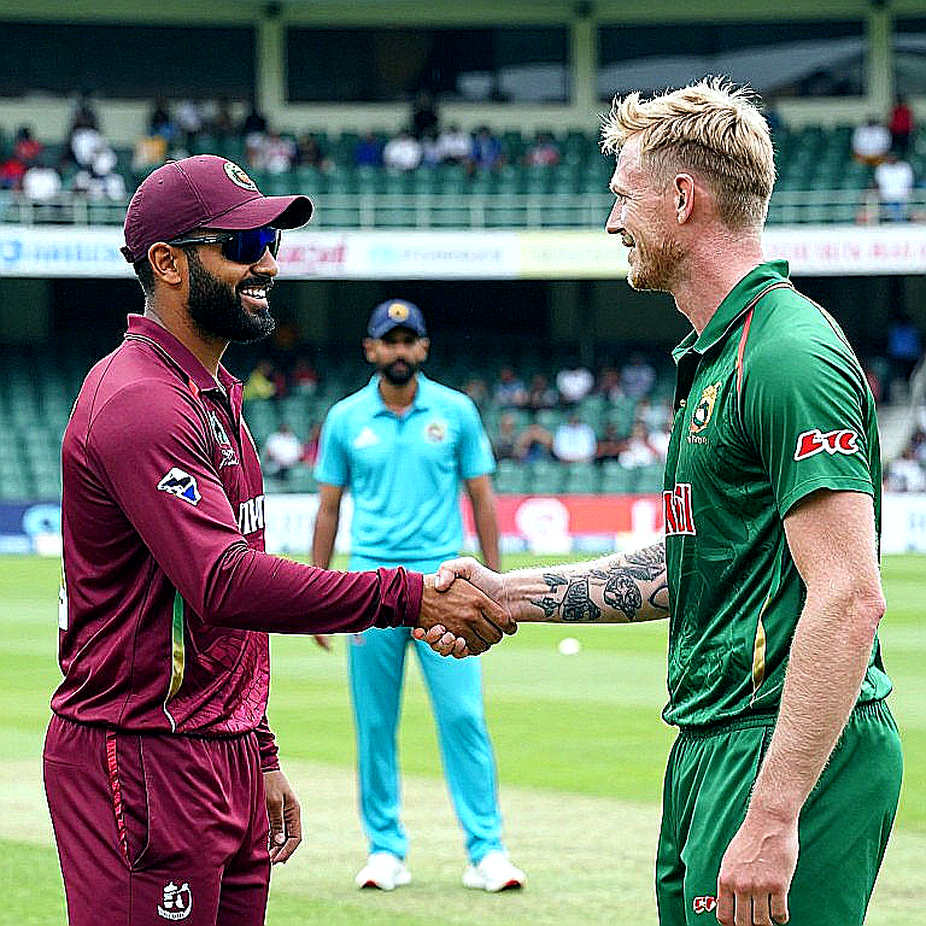
Having recently returned from New Zealand, he is scheduled to play in Indore on November 14 before departing for Doha on November 16. The available time for recovery, adjustment to local conditions and match preparation is limited. There is no disclosed information about his fitness, health or injury status, so suggesting a specific physical problem would be inappropriate.
Nevertheless, balancing travel, matches and training is particularly important for young players. Returning to India from New Zealand before batting on an Indore surface could require technical adjustments. Bounce, pace and the assistance offered by the surface may differ, influencing a batter's shot selection.
The subsequent assignment in Doha will introduce another set of conditions. However, both SMAT and the Emerging Asia Cup are T20 competitions, meaning there is no need to change formats. This is a positive factor. The basic batting framework, powerplay utilisation and middle-over scoring methods remain relevant in both tournaments.
But an identical format does not mean identical playing conditions. Different pitches, balls and weather require adjustments. It will be interesting to observe Sooryavanshi's technical adaptability across the two assignments.
At this age, success should not be evaluated exclusively through runs and captaincy records. Physical development, recovery, training balance and mental pressure are equally important. The support staff of Bihar and the national team must balance performance expectations with adequate recovery opportunities.
Is One Match of Captaincy Enough?
The strongest criticism of the appointment is that naming a player captain without making him available for the entire competition could create an unnecessary leadership transition. This argument is not without merit. Continuity is important in a T20 competition, particularly when teams must make tactical decisions across changing match situations.
But there is another side to the argument. If Sooryavanshi's absence is predetermined and Kashyap has already been appointed vice-captain, the arrangement may be better than an unexpected leadership change. The selectors have established a succession plan. Its effectiveness must be judged through implementation rather than the duration of the initial captaincy.
The real mistake would be to interpret one match as decisive evidence of Sooryavanshi's leadership ability. Equally, describing Kashyap as merely a temporary substitute would undervalue his responsibilities. He may carry the main responsibility for Bihar's strategy and results across most of the competition.
Another established assumption deserves examination. The presence of prominent names is frequently treated as evidence of a team's strength in domestic cricket. But genuine competitiveness depends on the entire combination, bowling options, fielding and decision-making under pressure. Sooryavanshi's popularity may attract additional attention to Bihar, but it cannot automatically compensate for weaknesses elsewhere in the squad.
In my years of watching cricket, one of the most useful distinctions has been separating a player's reputation from the structural strength of the team. A talented batter can win a match, but a strong domestic programme is what keeps a team competitive throughout a tournament. Bihar's real examination will come in the latter area.
What Should Be Watched Next?
The first question against Saurashtra on November 14 will be how Sooryavanshi balances his batting and captaincy responsibilities. Can he retain his natural aggression while adapting to the team's requirements? Can Bihar's bowlers maintain control during the powerplay? Does the side possess sufficient wicket-taking options during the middle overs?
Afterwards, attention must turn to tactical continuity under Kashyap. Will the batting order remain stable despite the change in captaincy? Will bowling responsibilities remain clearly defined? Can the team follow a consistent plan under pressure? These indicators will be more useful for understanding the quality of Bihar's leadership structure.
The Emerging Asia Cup will provide a different examination for Sooryavanshi. His contribution will extend beyond accumulating individual runs. He will need to perform according to his role within India's squad. Playing under Tilak Varma could also offer valuable developmental experience.
It is equally important to avoid unsupported record claims. Some reports describe Sooryavanshi as the youngest player ever to captain a team in T20 cricket. However, comprehensive global record documentation or independent official verification is not available to substantiate that claim. It would therefore be premature to describe it as a confirmed world record. It is sufficient to say that captaining the senior Bihar side at 15 is an exceptional achievement.
The Question Beyond the Appointment: Whose Leadership Will Define Bihar?
Bihar have given Sooryavanshi an important position within the state's cricket leadership structure. But the actual responsibility for the campaign will also rest with Suraj Kashyap and the rest of the squad. More important than the number of matches Sooryavanshi captains is whether the team can preserve its tactical identity after the transition.
The phase map has not yet produced a result; it has only revealed the availability gap. Rather than inventing runs, wickets or tactical outcomes before the match, the more useful exercise is to assess Bihar's planning and leadership structure.
The November 14 fixture will mark the beginning of a new responsibility for Sooryavanshi. After November 16, Bihar must continue with its second leadership arrangement. If the side reaches the Super League beginning on November 30, the credit and responsibility for its performances will belong to the leadership present at that stage.
Ultimately, the central question is not how many matches Sooryavanshi will captain. It is how stable Bihar remain after he leaves. Can Kashyap turn the opportunity into an independent leadership identity? Can Bihar develop their young talent through a broader and more consistent domestic structure? The answers will determine the actual value of this unusual appointment.